

 WS39 casing tooth
 JM cutter tooth
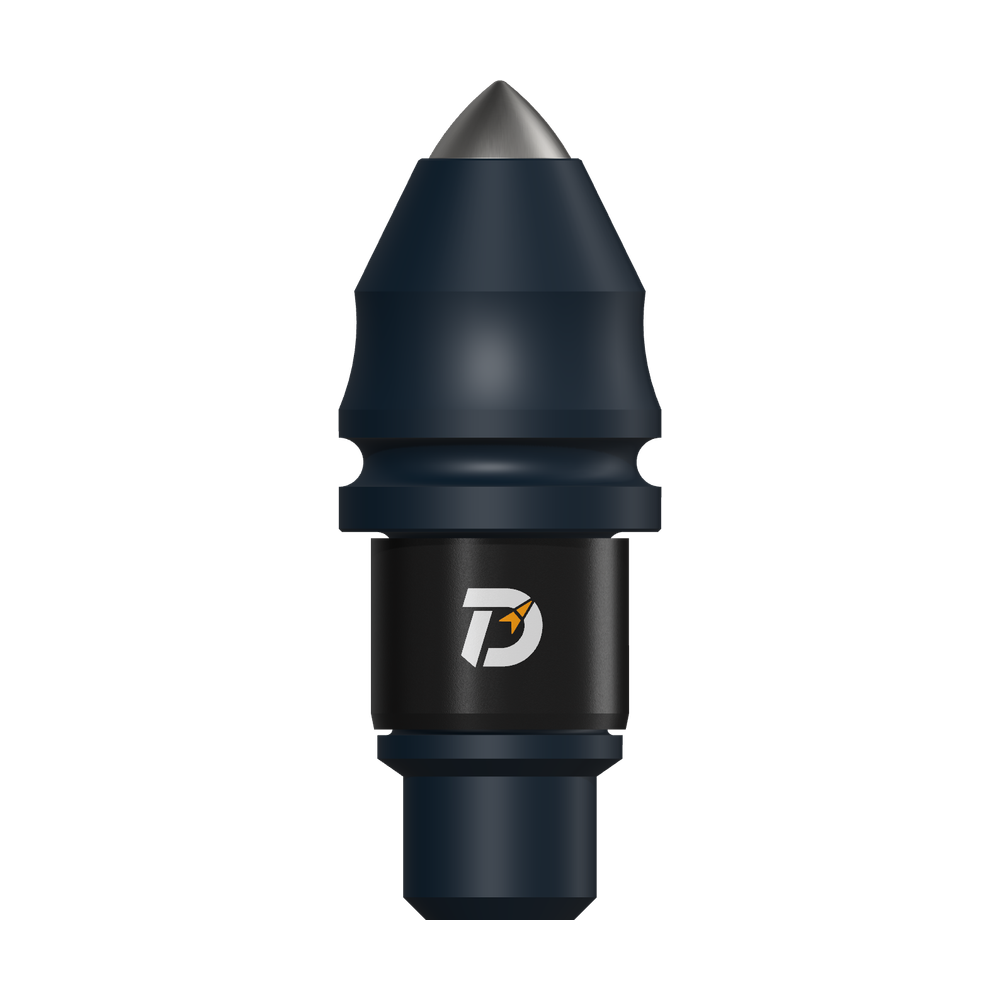 B47K22 bullet tooth
A pale chip from a piling bucket could be carbonate rock, quartz-rich sandstone or weathered crystalline rock. Calling all three “hard rock” hides useful differences. Start with visible texture and the depth the material came from; then use the ground investigation to confirm the interpretation.
This is a guide to describing evidence for a geologist and drilling-tool discussion. Reference photographs show named examples, not a visual test that identifies every site sample.
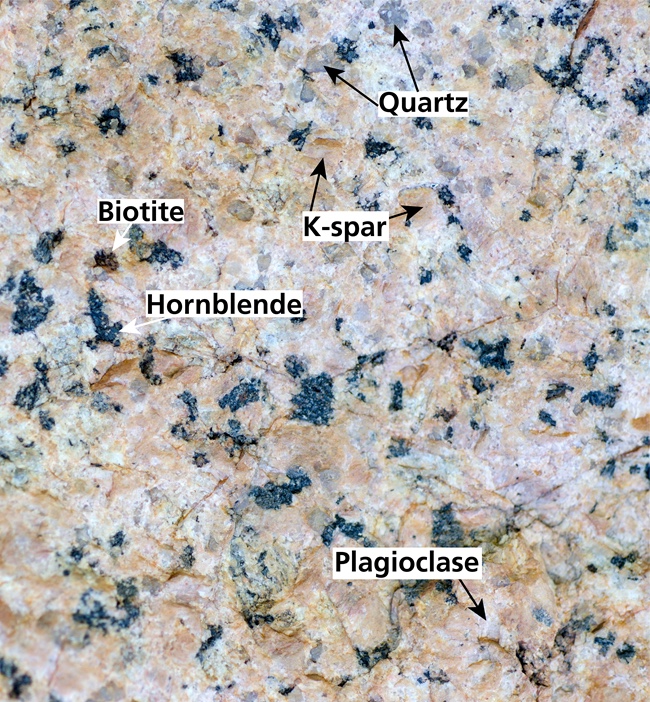
Record crystal size in millimetres.
Granite contains interlocking mineral crystals; sandstone contains cemented sediment grains. Measure several representative grains and photograph a fresh face beside a ruler. Drilling fragments and crystal sizes are different observations.
Selected crystalline grain-size classes
- Fine
- 0.032–0.25 mm
- Medium
- 0.25–2 mm
- Coarse
- 2–16 mm
Selected classes from the BGS Rock Classification Scheme, Figure 13. The scheme includes crystalline igneous, metamorphic and sedimentary rocks. State the scheme used: descriptive boundaries can differ between geological logs.
Coarse grains do not define a UCS value. Mineral composition, cementation, weathering and fractures also matter. The photographs below show texture; they are not the specimens in the published UCS table and do not share one scale.
Read the texture before the colour
Look for interlocking crystals, separate sediment grains, shells, laminations or a repeated mineral alignment. Compare a clean surface with the weathered exterior, preferably under neutral light and with a scale. A wet specimen and a dry one should be labelled accordingly. Keep uncertain descriptions descriptive: “dark, fine-grained, closely fractured” is more useful than an unsupported precise name.
Granite and basalt: two very different textures
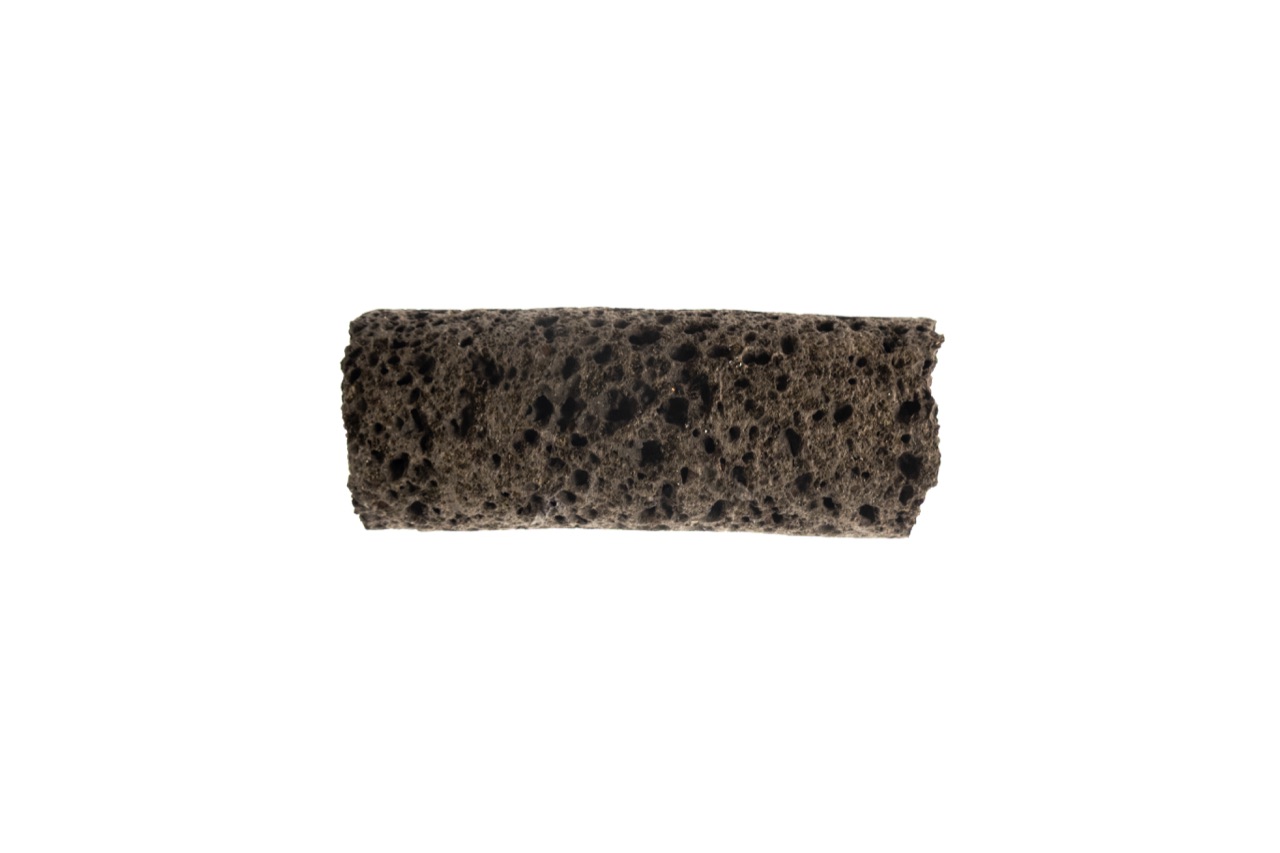
Granite normally shows visible, interlocking crystals. Quartz and feldspar dominate, with darker minerals adding contrast. A salt-and-pepper appearance alone is insufficient: granodiorite and diorite can look similar, and mineral proportions distinguish them. Basalt is generally dark and fine-grained; some varieties contain larger crystals or gas cavities called vesicles. The specimen shown is vesicular basalt, not a template for every basalt encountered underground. These distinctions follow NPS igneous-rock guidance.
Limestone, sandstone and shale: inspect grains and layers
Limestone
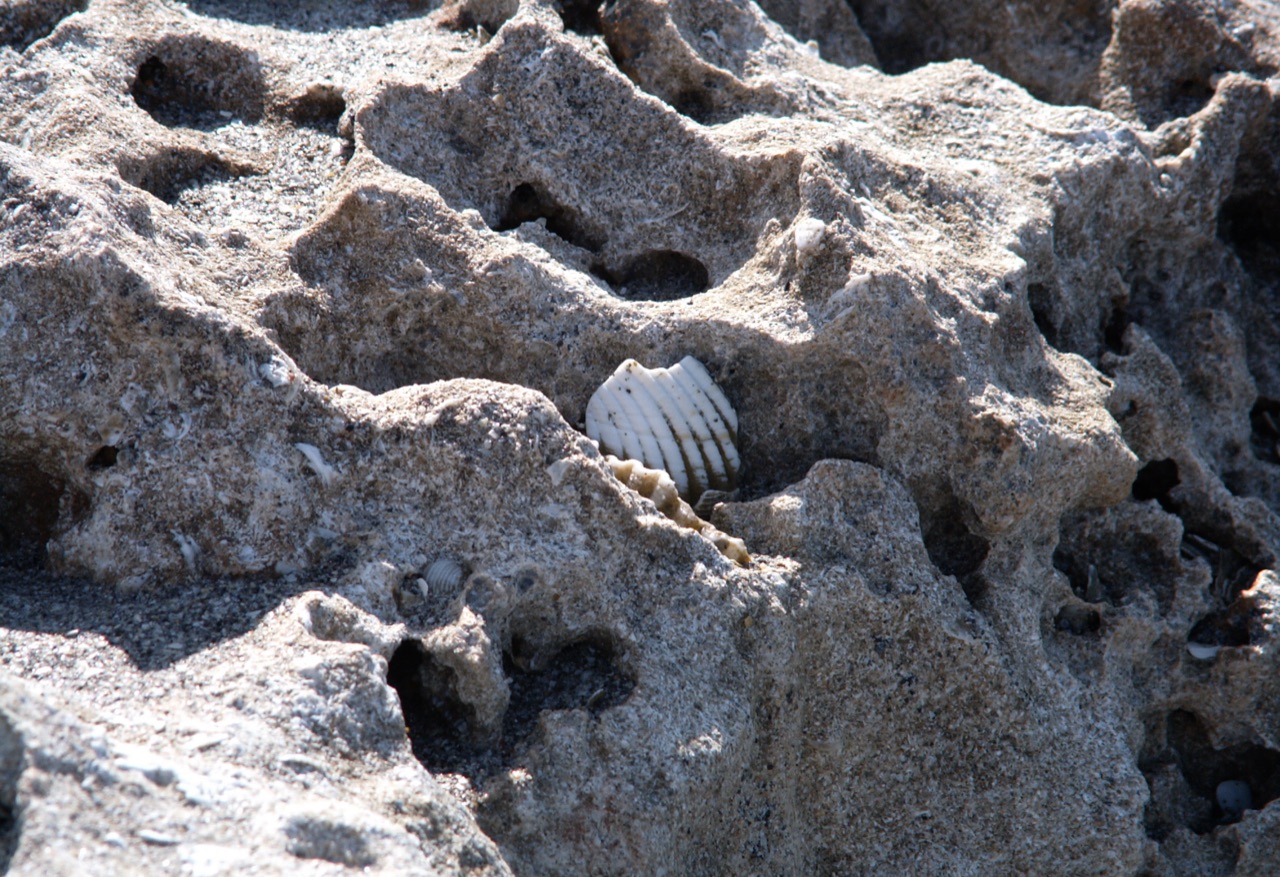
Limestone may show shells or fossil fragments, but many varieties lack obvious fossils. Carbonate composition matters more than a grey colour. The Anastasia example contains visible shell material; it should not be confused with a universal limestone texture. Carbonate dissolution can also create cavities, so an intact-looking fragment does not describe the surrounding ground. See NPS examples of carbonate rock.
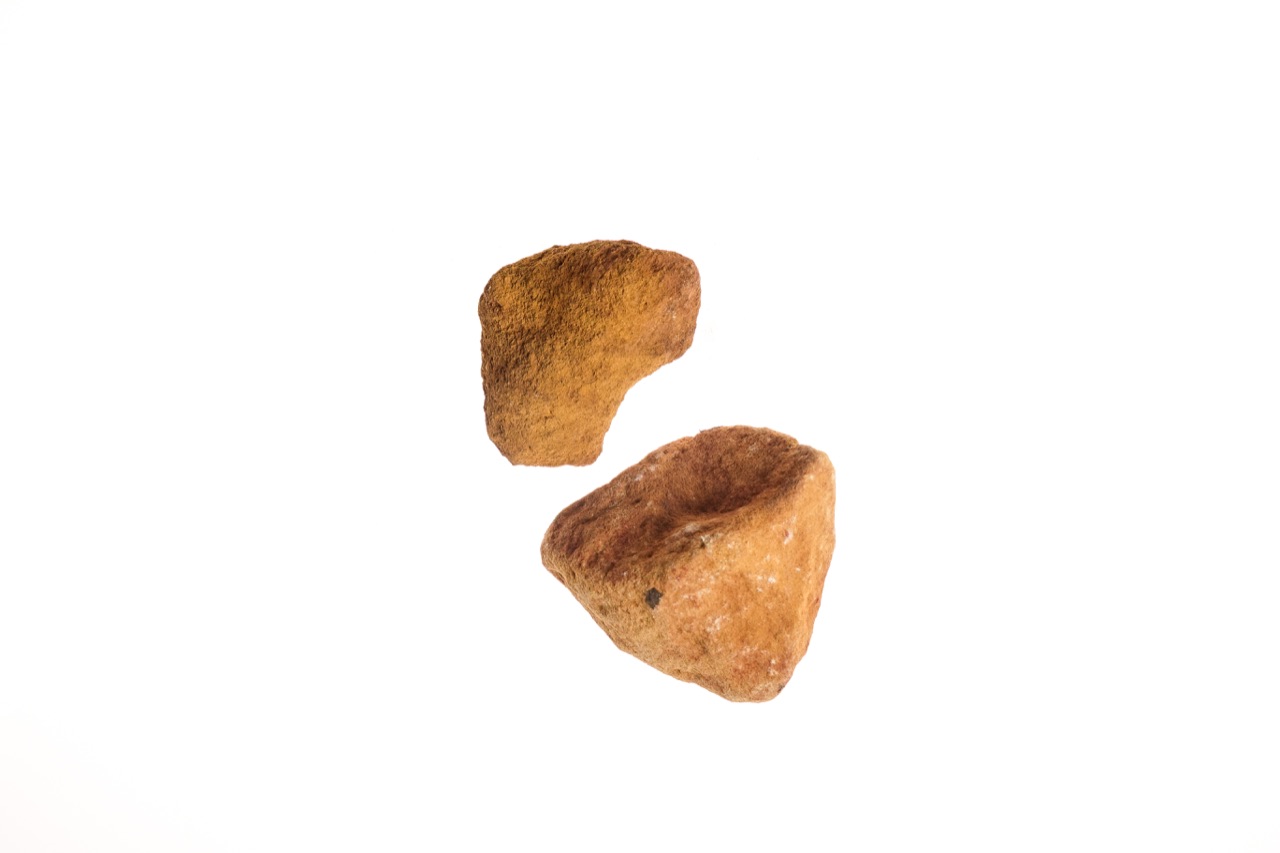
Sandstone
Sandstone consists of sand-sized particles held together by cement. Look for individual grains and bedding, rather than assuming that a brown or red sample must be sandstone. Grain size, cementation and layering are separate observations; sandstone is not automatically weak. NPS sedimentary-rock guidance explains this distinction.
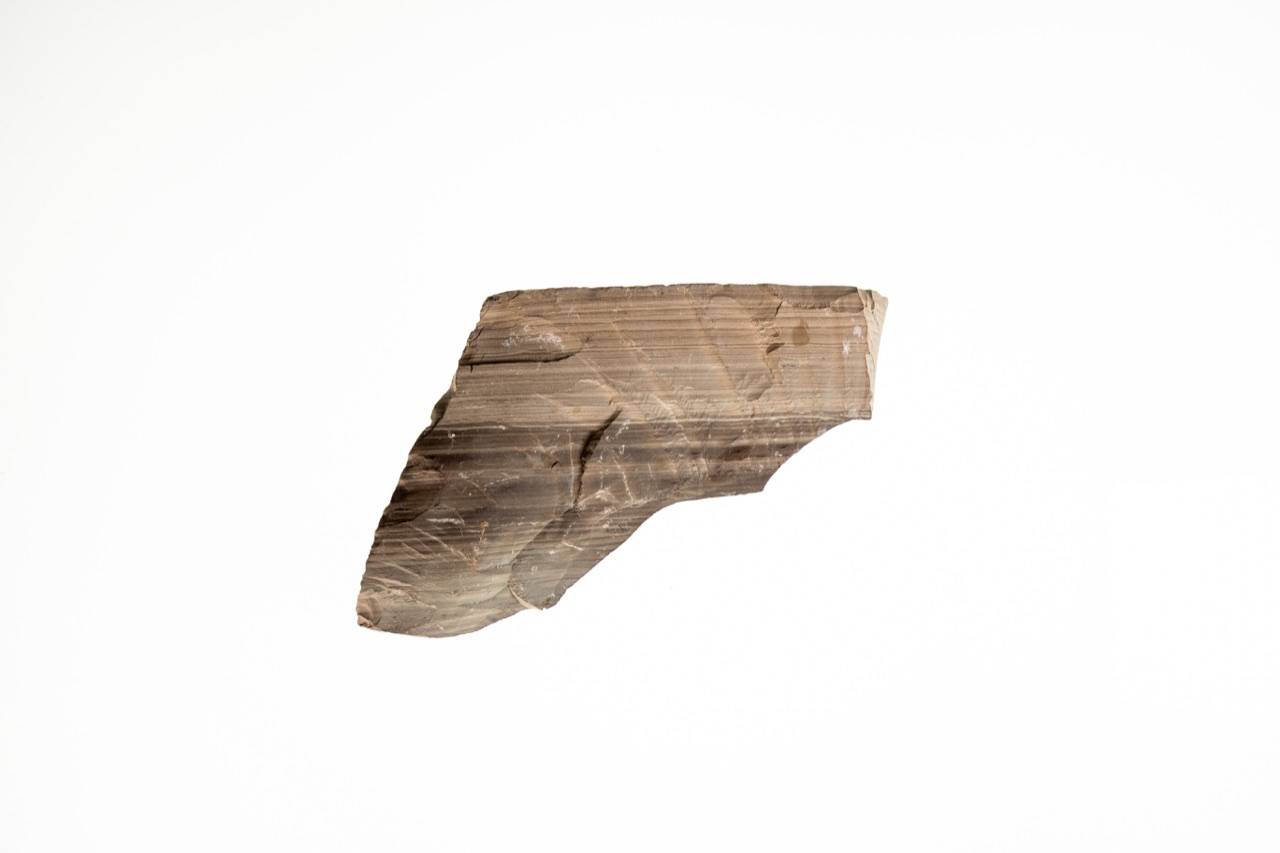
Shale
Shale is much finer-grained. Thin layering and a tendency to split along closely spaced layers are useful clues, but a muddy coating can conceal them. Record whether a sample breaks along pre-existing planes or across the material. The example shown is specifically oil shale; ordinary shale need not have its colour or composition. BGS shale classification
Do not mistake metamorphic fabric for sedimentary bedding
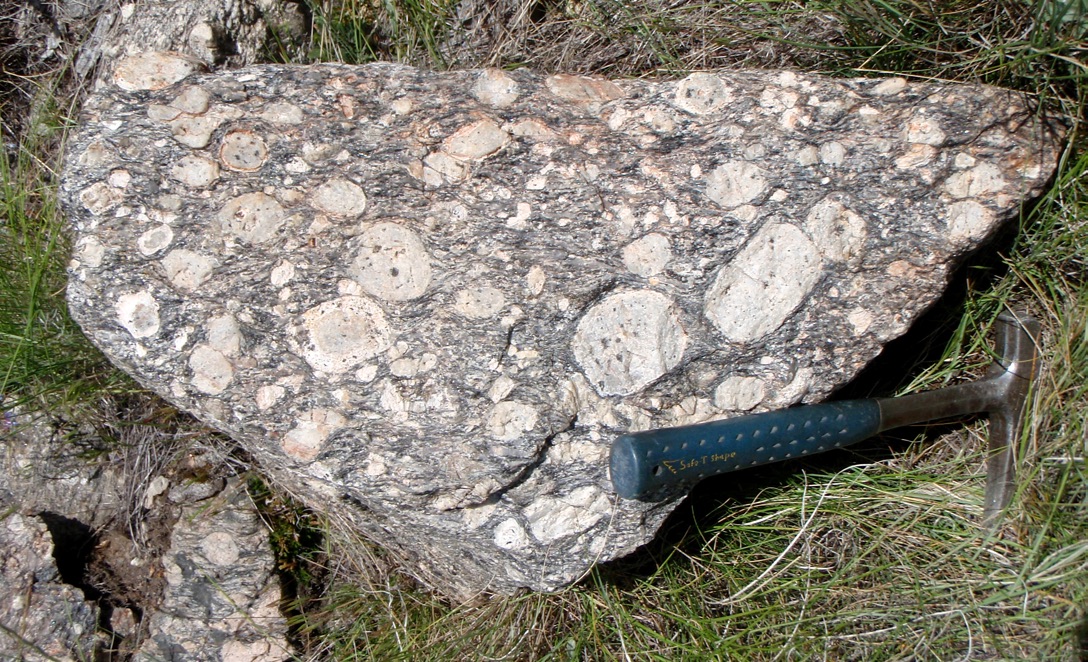
Heat and pressure can transform earlier rocks. Slate, schist and gneiss can show a preferred mineral orientation or foliation. Gneiss may have bands or eye-shaped mineral grains; the photographed augen gneiss shows the latter. Marble and quartzite are commonly non-foliated, so the absence of bands does not rule out metamorphism. NPS metamorphic-rock guidance
Two useful comparisons are limestone versus marble and sandstone versus quartzite. Recrystallization changes the fabric: do not assign the original sedimentary name solely from colour. BGS also illustrates how granite and sandstone can contain similar minerals while arranging them differently. BGS rock and mineral guide
Record what the rock mass adds
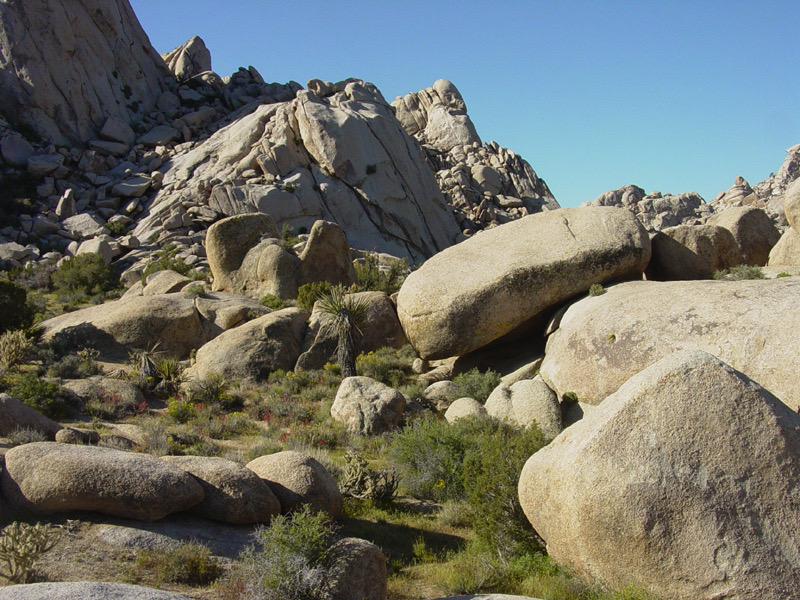
A fresh piece does not show how frequently the formation is fractured. Photograph the core box or exposure as well as a close-up. Note weathered rims, changes across the interval and visible infill along discontinuities. Rounded weathering surfaces, such as the granite boulders shown here, are another reason to examine the interior rather than identify rock from its outer colour alone.
For construction, FHWA considers rock strength together with fracturing, weathering, groundwater and drilling observations. A named specimen therefore supports the discussion; it cannot establish the behaviour of the whole pile interval. FHWA drilled-shaft guidance, Chapter 2
Turn a sample into a useful selection discussion
Send an overview and close-up with the pile or borehole reference, depth interval, scale and geologist’s logged description. Identify cuttings that may be mixed from different depths. Add the current tool and the point at which progress changed. The next question is how the material breaks and wears the cutters: read rock strength, abrasivity and tool selection, then request a rock-interval review.