
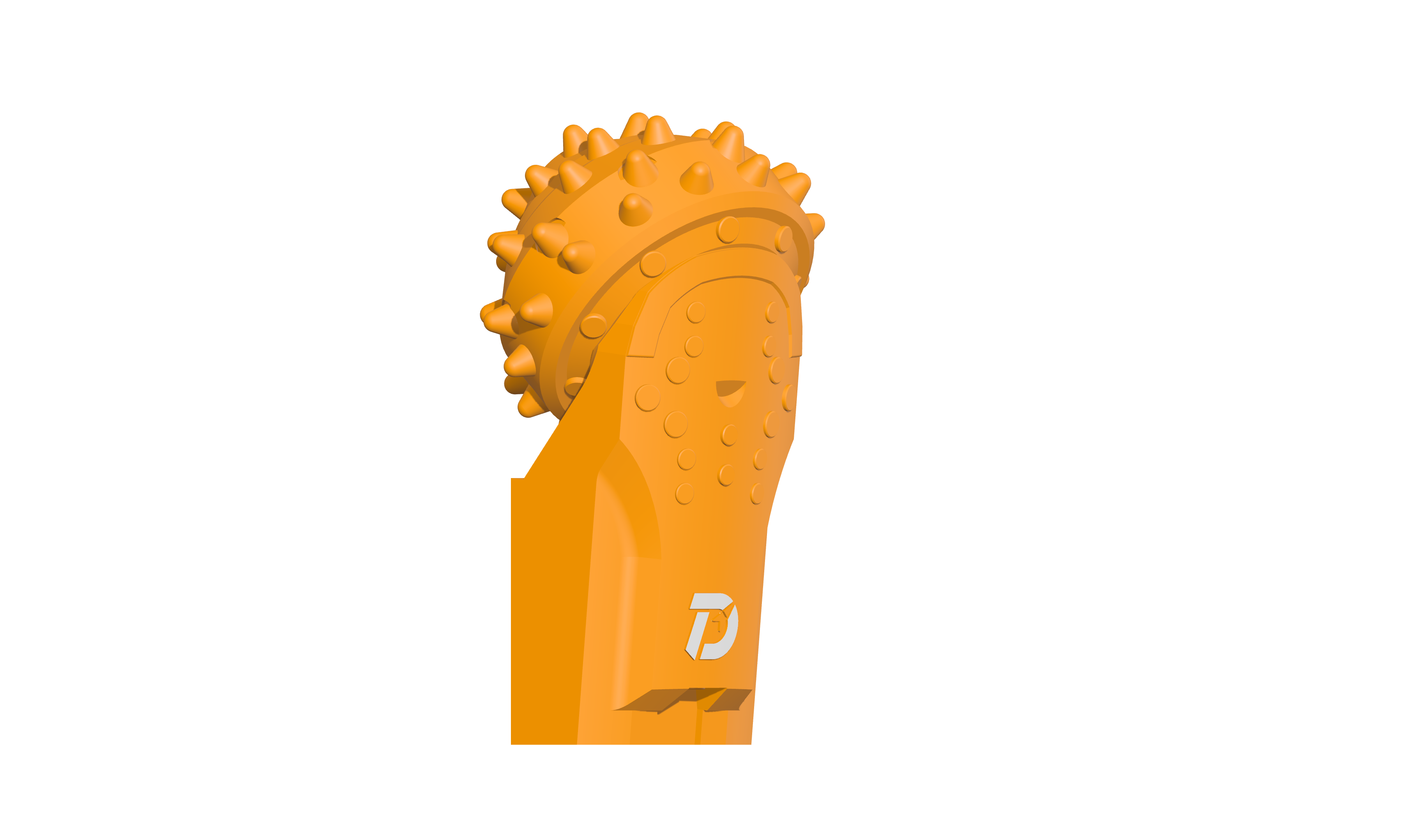
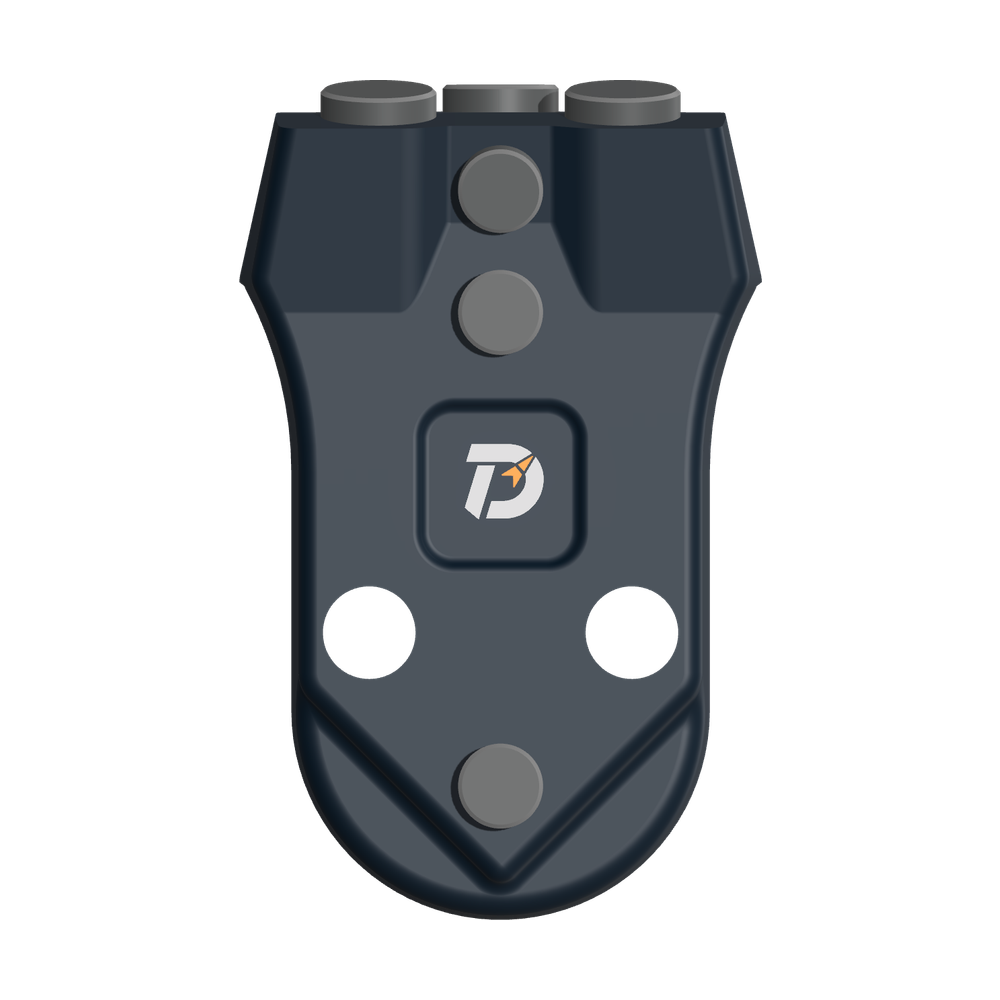
 WS39 casing tooth
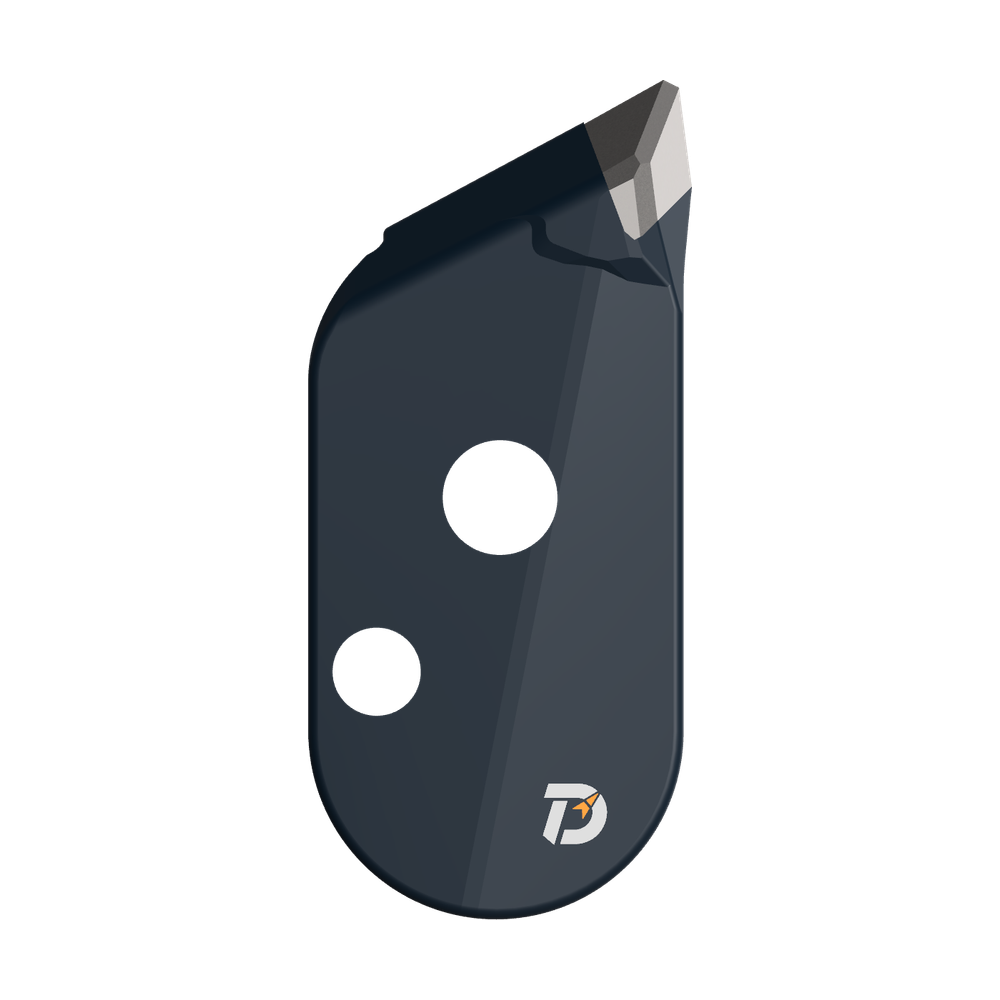 JM cutter tooth
DRILLNOVA / ROTARY DRILLING TOOLS
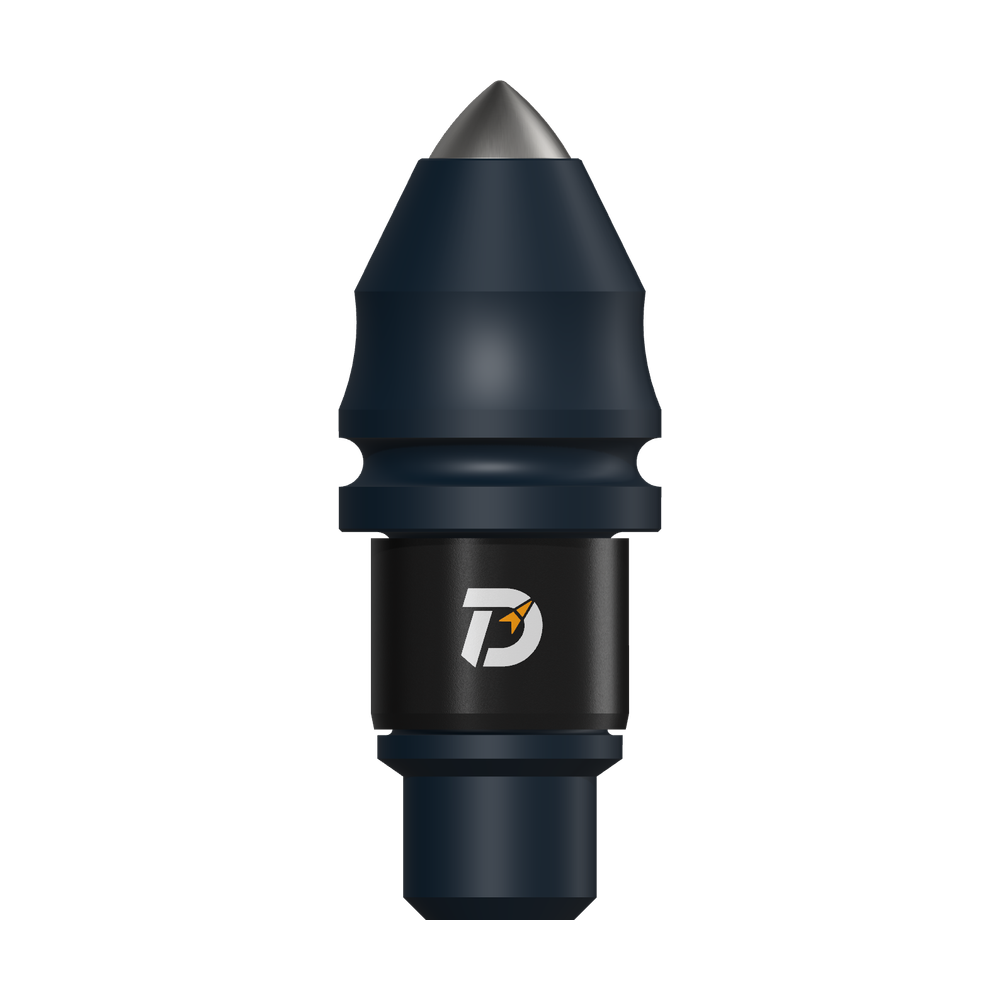
B47K22 bullet teeth
A round shank chisel with a 22 mm carbide insert and 50 mm steel body. Check its dimensions, holder fit and inspection points before choosing the complete cutting set.
- 22 mm
- Insert diameter
- 50 mm
- Body diameter
- 130.1 mm
- Catalogue overall length
Read the dimensions as one configuration
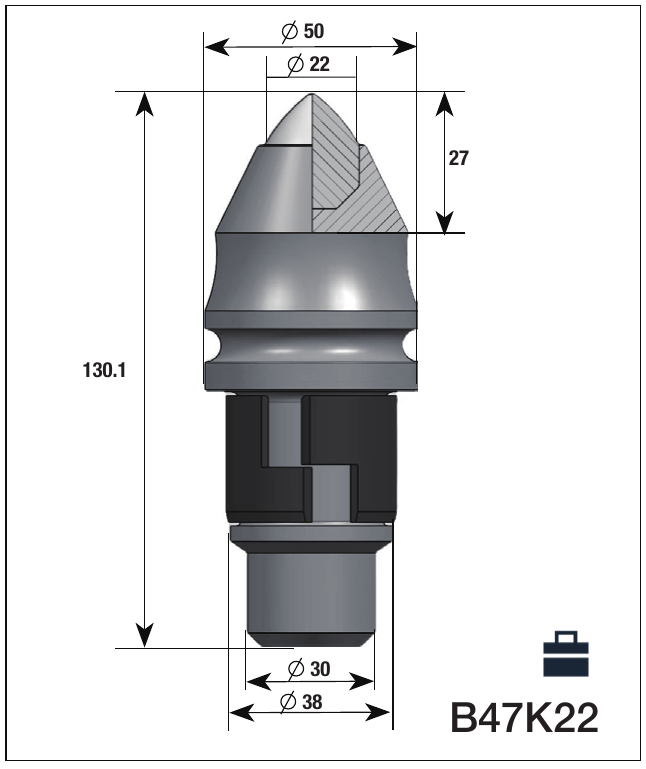
The catalogue drawing shows a 50 mm body diameter, 22 mm carbide insert and 130.1 mm overall length. Its section view identifies a 27 mm insert-height dimension. The lower part carries separate 30 mm and 38 mm diameter callouts; compare both with the matching holder and retention components.
A similar silhouette does not establish the same fit. The holder bore, seating shoulder and retention arrangement need to correspond to the actual tooth version. An old holder that is worn or distorted changes that relationship even when the replacement carries the same model name.
B47K22 and B47K22H are distinct
| Feature | B47K22 | B47K22H |
|---|---|---|
| Insert diameter | 22 | 22 |
| Body diameter | 50 | 50 |
| Section insert-height callout | 27 | 30 |
| Overall length | 130.1 | 130.5 |
| Lower diameter callouts | 30 / 38 | 30 / 38 |
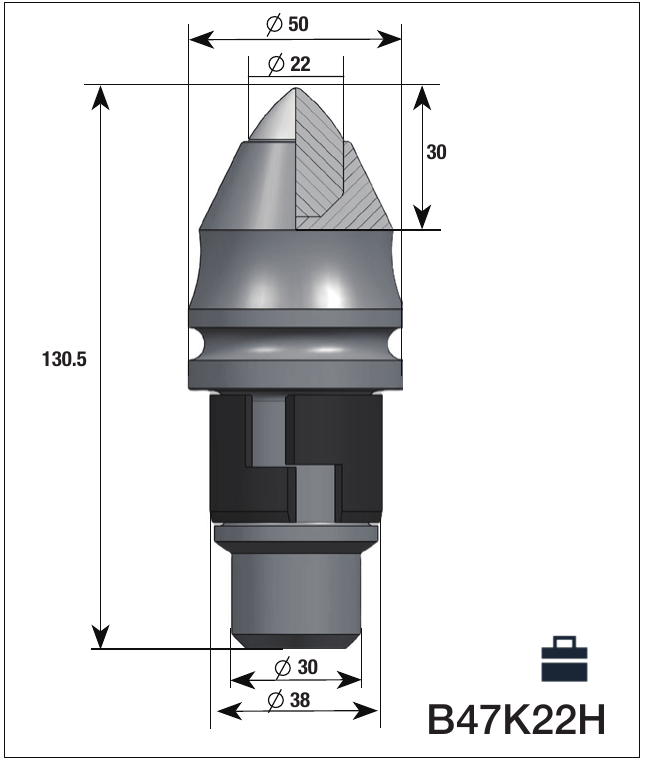
Do not read the H suffix as a hardness grade. Compare the dimensioned versions when selecting a replacement. In the same range, B47K26D and B47K28D show wider 60 mm bodies, larger inserts and protective buttons; those features should not be assumed on the standard B47K22.
Dimensions are nominal catalogue references. The agreed tooth, holder and retention drawings define the supplied fit.
Protect the support, not only the cutting point
In abrasive ground, steel around the carbide can wear back while the cutting point still projects. Hardfacing and protective carbide buttons target that steel-body wear. They are different from increasing the size of the main insert, and their presence must be specified for the selected version.
Strongly one-sided wear also calls for a look at tooth movement and holder condition. Packed fines, a damaged holder or unsuitable retention parts can interfere with the intended movement or seating. Tooth height and position within an outer–middle–inner arrangement influence both engagement and the space available for fragments to move.
Plan the checks before the first trial
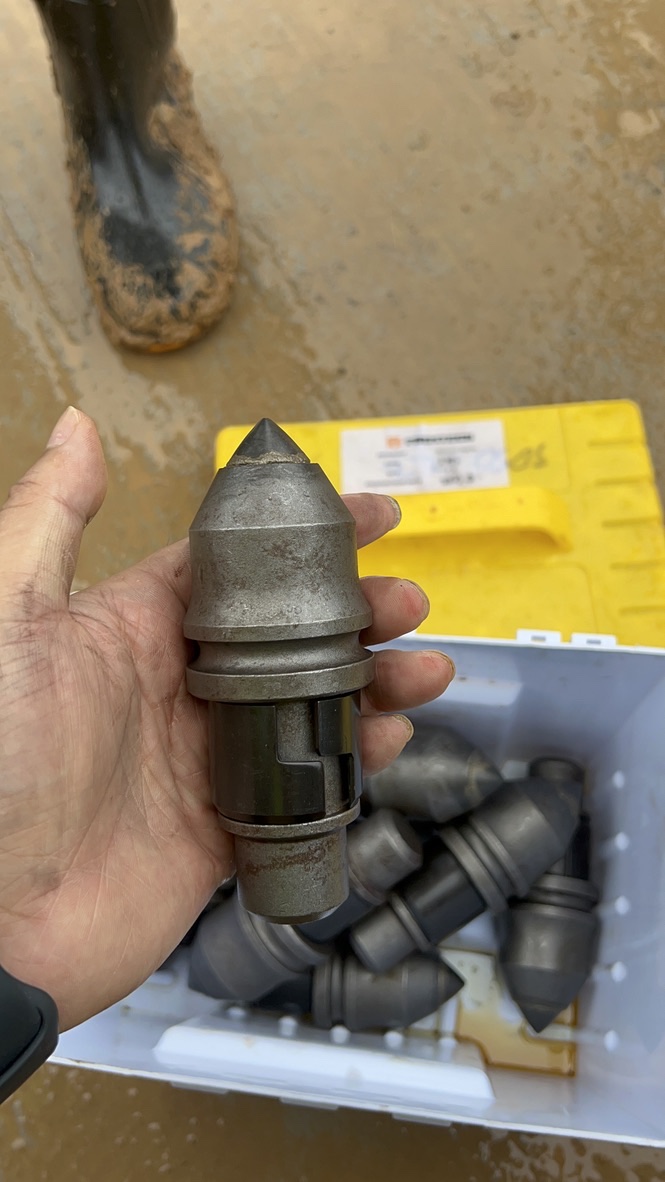
Confirm the tooth, holder and retainer as one installed set. Check the bore and seating shoulder, working projection, retention and tooth movement. A worn or distorted holder needs its own inspection before a new tooth is fitted.
Number the cutting positions and photograph the starting condition. At each lift, keep tooth wear, holder condition and any replacement with the drilling interval. The pictured historical test sample used a recorded 22 × 28 mm insert; it is separate from the catalogue’s 27 mm section-height callout above.
Set up position-by-position inspection recordsMatch the tooth and holder together
Send the part reference, quantity, destination and photos of the tooth, holder and retainer. For a worn assembly, add a full-ring view showing the inner, middle and outer positions.
Request a B47K22 configurationRead the ordering checks