
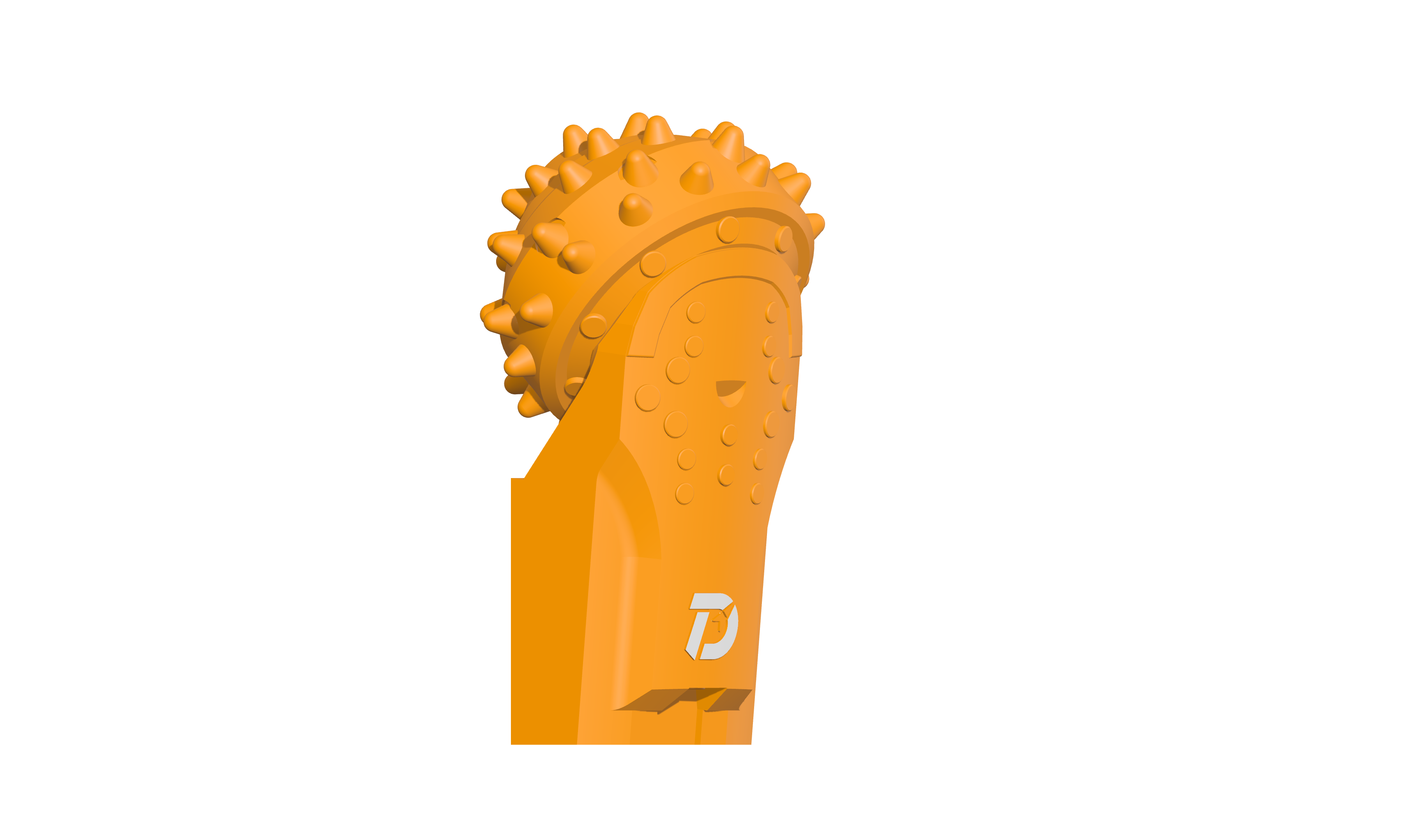
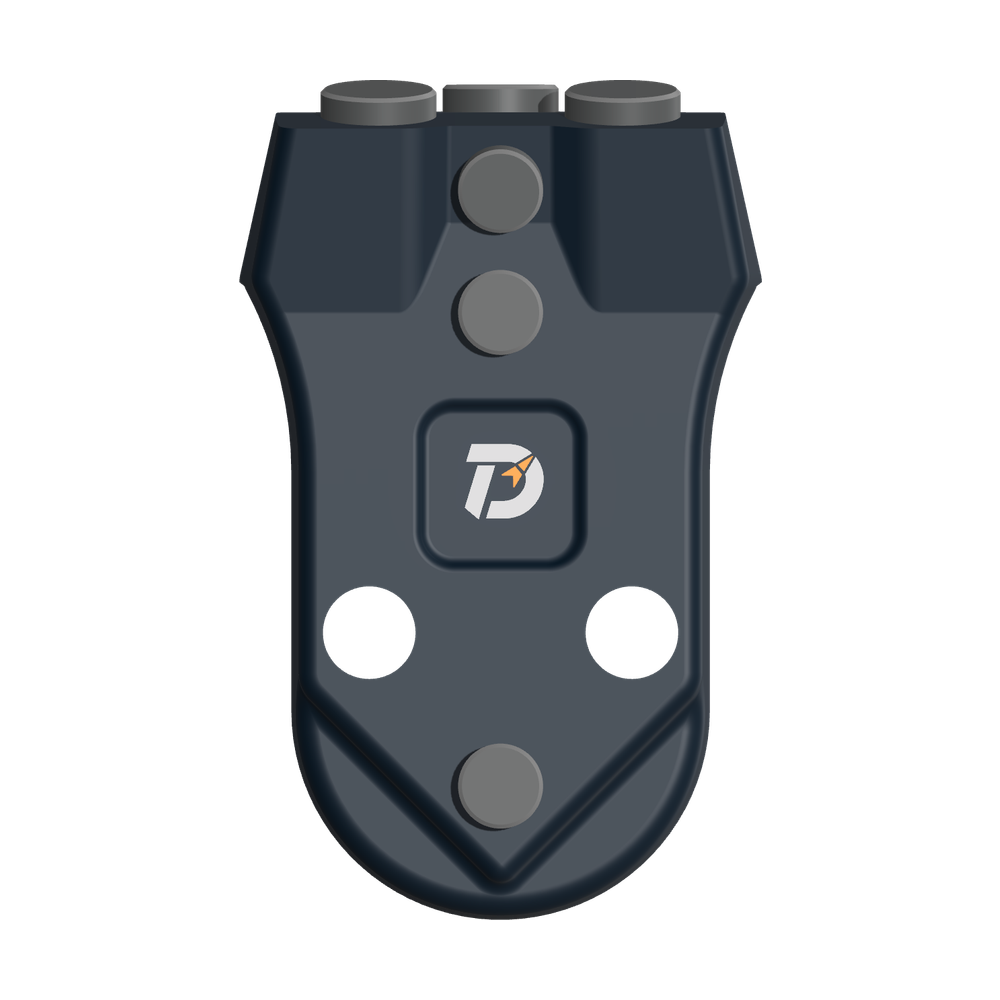
 WS39 casing tooth
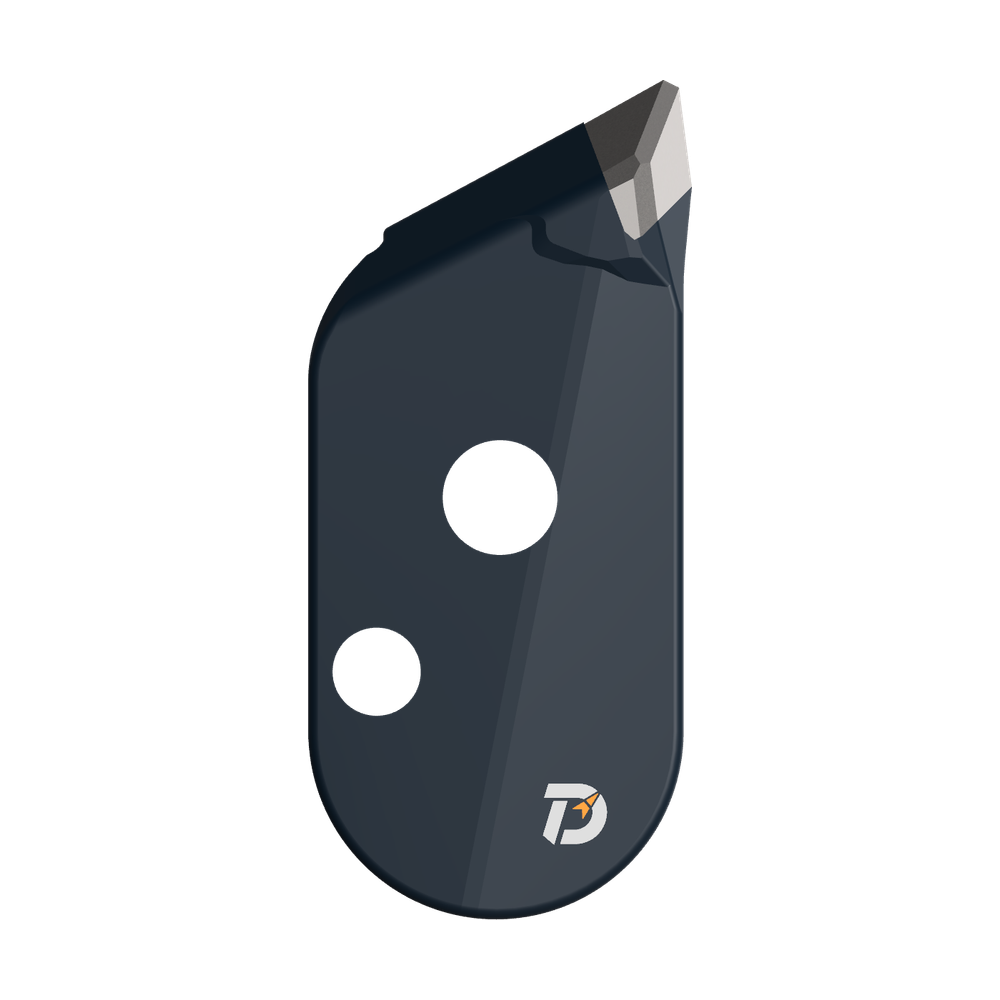 JM cutter tooth
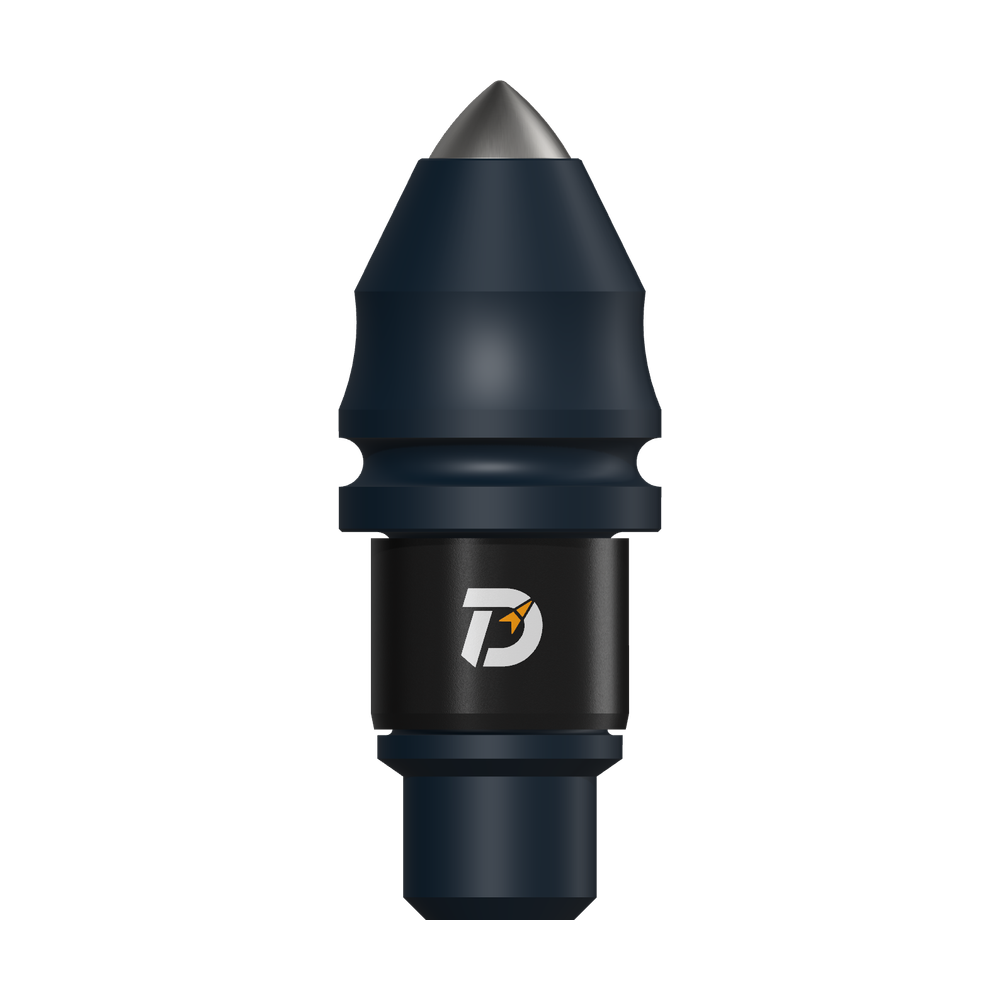 B47K22 bullet tooth
Guangdong · 5–6 December 2023 · B47K22 trial
Changing the method when cuttings build up.
DRILLNOVA · Field report · Updated
During a B47K22 trial in a 1,200 mm pile, the operator encountered high resistance. Lifting the core barrel revealed packed cuttings, while an earlier inspection had found uneven outer-tooth wear and one tooth that could not rotate.
The crew cleared the hole, reviewed the recovered ground and changed to direct breaking and clearing with the 1,200 mm bucket. The site note reports faster progress after this change. This case shows how an inspection led to a practical change of method, alongside the separate review of tooth condition.
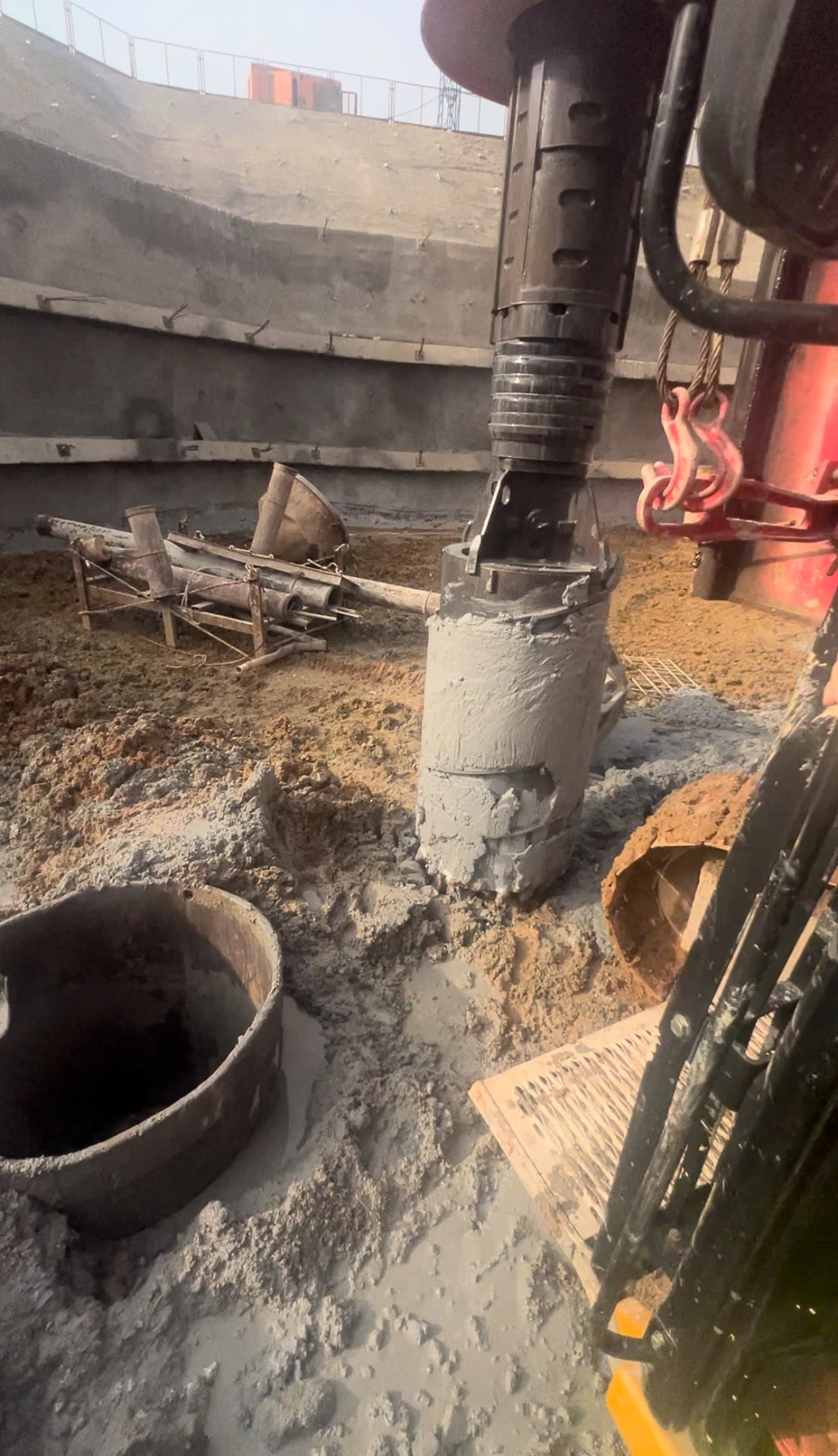
The result is the site team’s observation after changing the working method. The photographs and depth record below explain the decision; there is no timed before-and-after comparison.
Define the cutting and clearing stages.
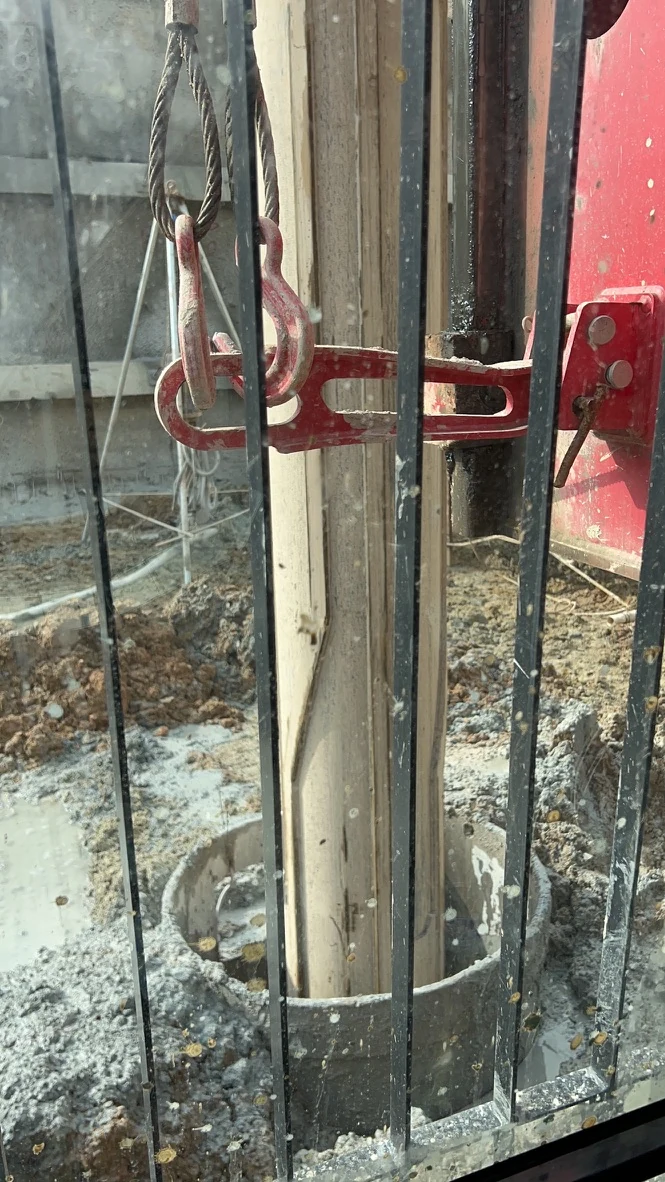
A Sany 405R worked pile T-47 with a 1,000 mm B47K22 core barrel and a 1,200 mm drilling bucket. The barrel cut the rock; the larger bucket enlarged and cleared the 1,200 mm pile. The initial ground was recorded as moderately weathered gneiss in a water-filled hole.
14:32 → 14:35 · record the cutting interval.
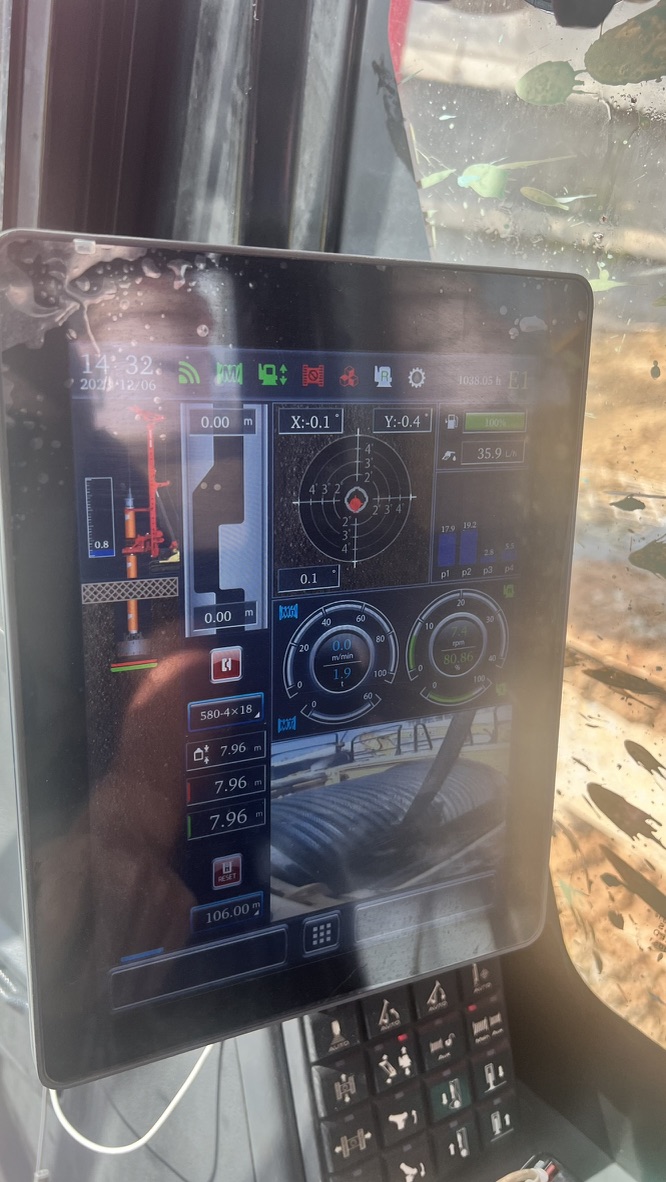
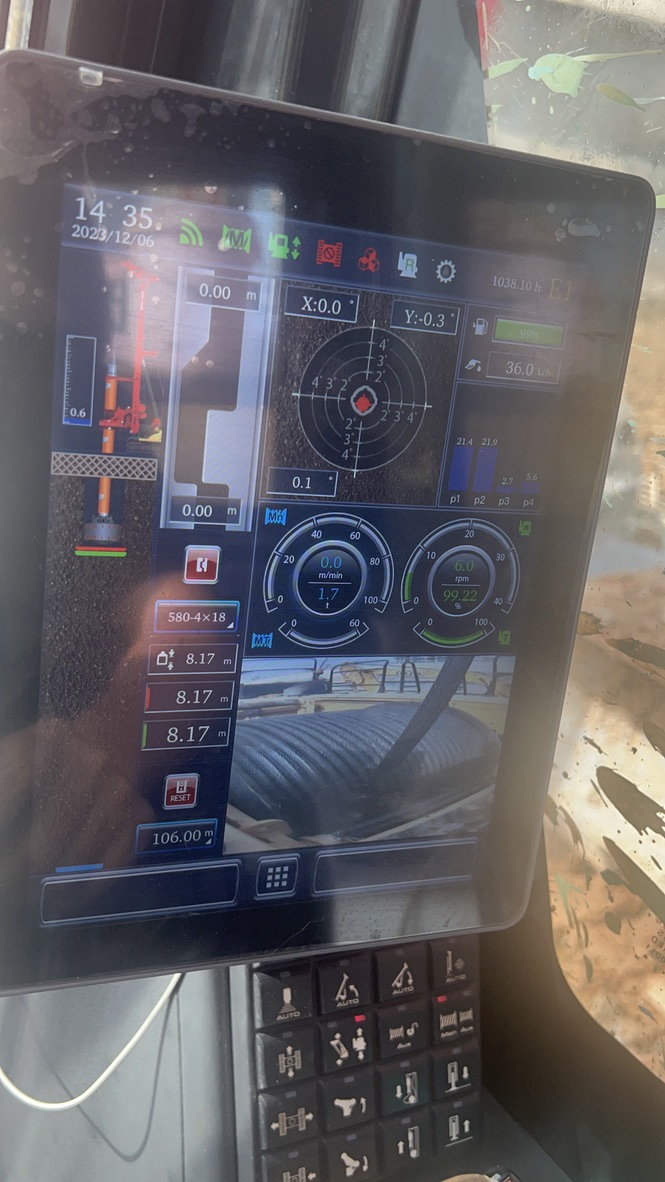
Two cab photographs anchor the 7.96–8.17 m interval. The later lifts exposed the outer teeth and accumulated material. Read the settings below with those inspection points.
| Stage / depth | Head speed, r/min | P4 indication* | Field action |
|---|---|---|---|
| 14:32 → 14:35 · 7.96 → 8.17 m | 7.4 → 6 | 5.5 → 5.3–6 | 0.21 m in 3 effective cutting minutes. |
| 14:47 · 8.83 m | Not recorded at lift | Not recorded at lift | Lifted and inspected the outer teeth before the next run. |
| 15:01 · 9.22 m | Not recorded at lift | Not recorded at lift | Lifted after high resistance; changed to bucket clearing when packed material was found. |
*P4 units were omitted in the source. The complete checkpoint table below retains the readings without converting them to force.
Subsequent readings at 8.47 and 8.67 m, plus the Y-axis readings, are retained in the complete operating table below.
The first lift exposed a tooth-rotation problem.
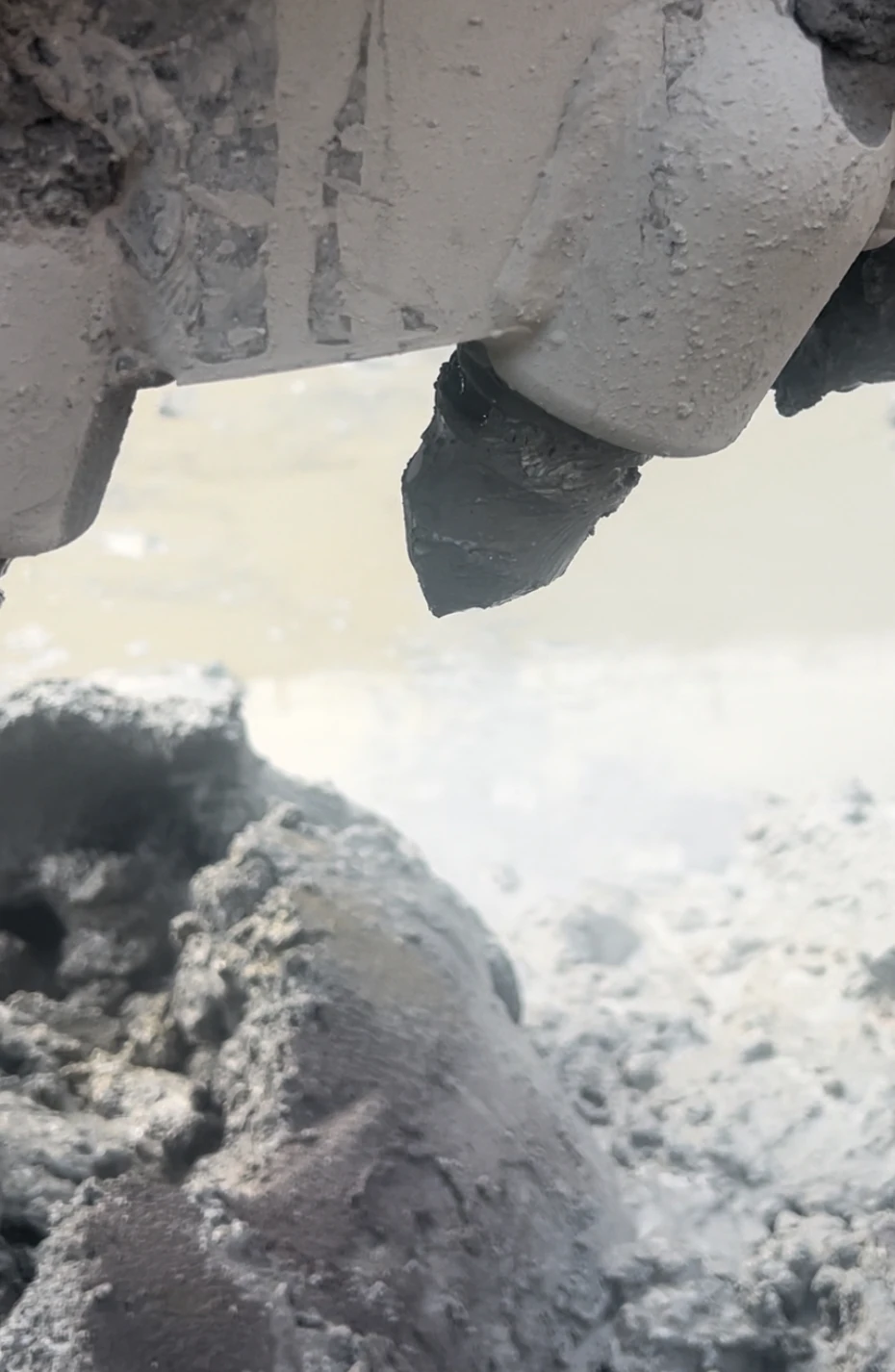
At 14:47 and 8.83 m depth, one outer tooth could not rotate and all outer teeth showed uneven wear. The team recorded the condition of the teeth on the lifted barrel. This made the affected area clear for a tooth-and-holder review; it did not isolate the cause of the rotation problem.
The next lift explained the immediate clearing decision.
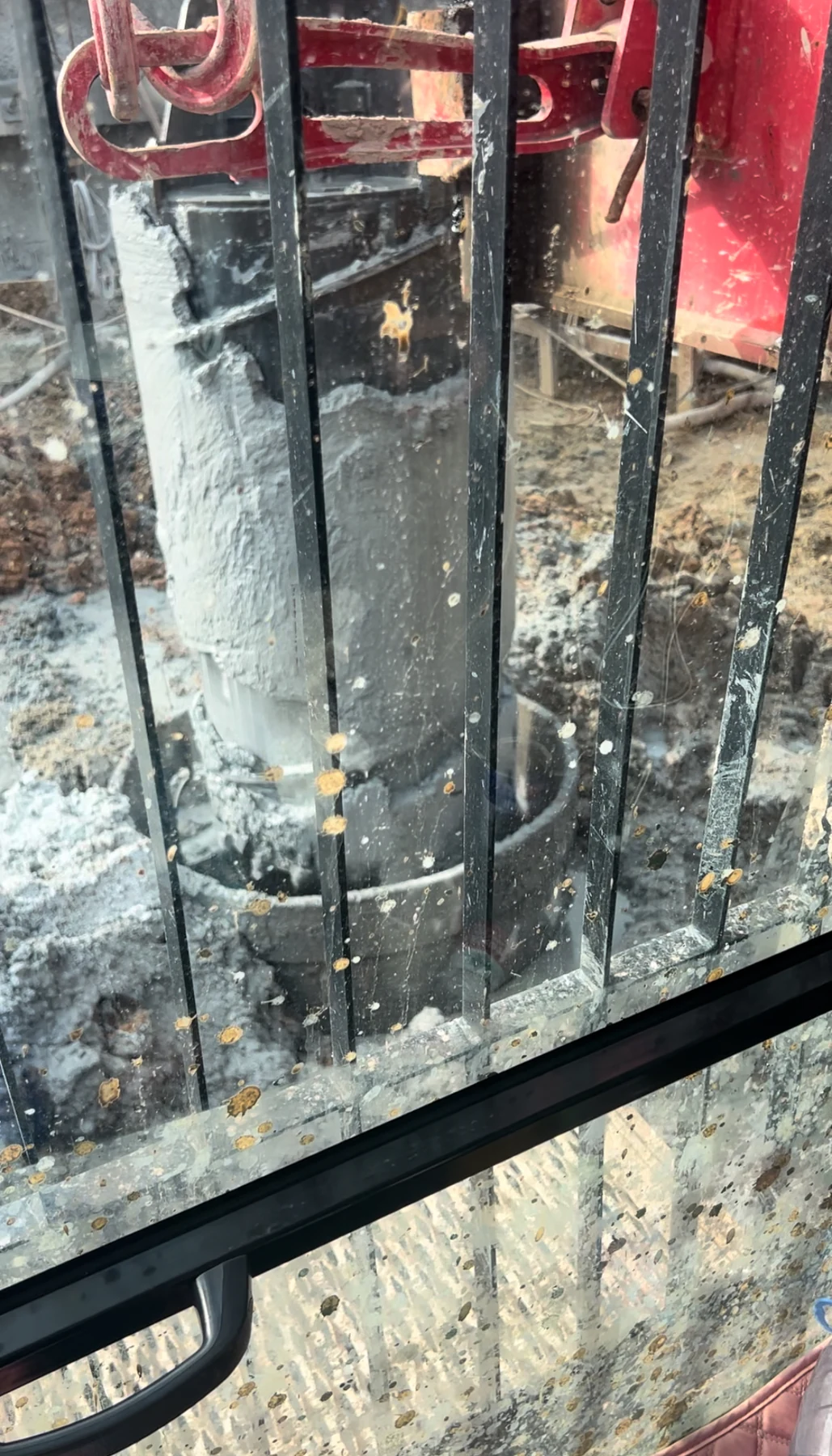
At 15:01 and 9.22 m, the operator reported high resistance. Lifting revealed heavy cuttings build-up around the cutting assembly. The crew changed to the bucket to clear the hole, so the material and the drilling response could be reviewed together.
The recovered ground changed the working method.
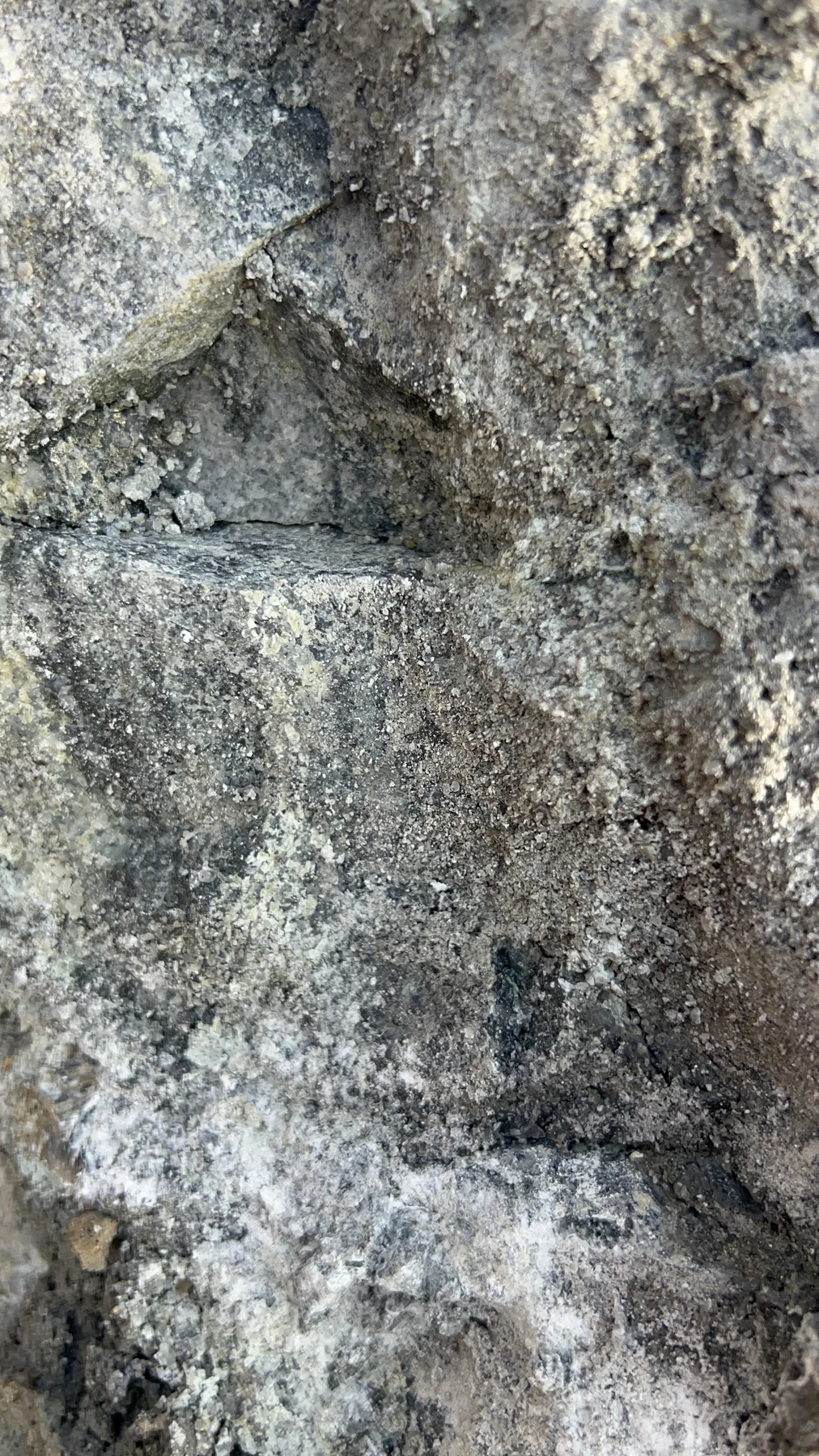
The crew considered the cleared material and the cutting response, and judged the rock to be more weathered. They changed from the barrel-and-bucket sequence to direct breaking and clearing with the 1,200 mm bucket.
The site note reports faster progress after the change. It is a useful result of matching the method to the observed ground. The record does not quantify the gain or attribute it to the B47K22 teeth alone.
What did the on-site review change?
The crew acted on what the lifted tool and recovered material showed, and the record reports faster progress with the revised method. The case connects a drilling symptom to an inspection, a clearing action and a practical decision about the next tool.
One problem prompted an immediate action.
Heavy resistance led to a lift at 9.22 m. Visible cuttings build-up led to bucket clearing. The recovered material then supported the decision to continue with direct bucket breaking and clearing in the more-weathered ground.
The tooth condition remained a separate technical review.
The non-rotating tooth and uneven wear were photographed and retained in the record. Changing the working method does not show that the rotation problem was repaired. The next tooth review still needs the holder condition, freedom of rotation and installed arrangement.
A useful decision for another site.
When resistance rises or material packs around the cutters, a tool selection can depend on the recovered ground as much as the tooth specification. Bring those observations into the same review so the next decision covers both the replacement part and the working sequence.
The operating log and inspection decisions
Pile, trial teeth and project context
| Item | Recorded detail |
|---|---|
| Trial pile / rig | T-47; Sany 405R |
| Pile and paired tools | 1,200 mm pile; 1,000 mm bullet-tooth core barrel + 1,200 mm drilling bucket |
| Trial teeth | B47K22; carbide written as 22 × 27 mm in this trial record |
| Fluid / initial rock description | Water-filled hole; moderately weathered gneiss |
| Recorded rock entry / final hole depth | 7.58 m / 10.04 m |
| Wider project register | 170+ piles across 1,000, 1,200 and 1,400 mm diameters; 25-day period stated in the project notes |
The 170+ piles and 25-day period describe the wider project, not this tooth set. The 22 × 27 mm carbide entry belongs to the historical trial batch; current supply follows the selected drawing.
Open the depth and lift sequence
| Time | Hole depth | Recorded operation / observation |
|---|---|---|
| 13:35 | — | Prepared B47K22 test barrel fitted |
| 14:32 | 7.96 m | Head speed 7.4 r/min recorded |
| 14:35 | 8.17 m | 0.21 m over the preceding 3 minutes; head speed 6 r/min |
| 14:39 | 8.47 m | Head speed 6.3 r/min |
| 14:43 | 8.67 m | Head speed 5.8 r/min |
| 14:47 | 8.83 m | Lift and inspection: 1 outer tooth stuck; all outer teeth showed uneven wear |
| 14:55 → 14:58 | 8.83 → 9.17 m | Barrel lowered and drilling resumed |
| 15:01 | 9.22 m | High resistance reported; tool lifted and packed cuttings found |
| After lifting | — | Bucket used to clear; recovered material and drilling response led to direct breaking/clearing with the 1,200 mm bucket |
Observed condition, action and unresolved question
| Observation | Action recorded | Question for the next review |
|---|---|---|
| 1 non-rotating outer tooth and uneven wear across the outer teeth | Tool lifted and tooth condition photographed | Which tooth/holder positions were affected, and did free rotation return after cleaning? |
| Heavy packed cuttings on the later lift | Changed to the bucket to clear the hole | How did cuttings and fluid condition change between lifts? |
| Recovered material appeared more weathered | Changed to direct breaking and clearing with the 1,200 mm bucket | Record the next timed cycle under the changed method |
Pressure, head speed and depth at each recorded check
6 December 2023 · T-47 · Sany 405R. The retained cab photos show the date. These are observed settings in this pile; blank fields below mean that the log did not give a reading.
| Local time | Depth, m | Head speed, r/min | P4 reading* | Y-axis inclination, ° | Recorded event |
|---|---|---|---|---|---|
| 14:32 | 7.96 | 7.4 | 5.5 | -0.4 | Cutting checkpoint |
| 14:35 | 8.17 | 6 | 5.3–6 | -0.3 | 0.21 m in 3 effective cutting minutes |
| 14:39 | 8.47 | 6.3 | 6.7 | -0.4 | Cutting checkpoint |
| 14:43 | 8.67 | 5.8 | 6.3 | -0.4 | Cutting checkpoint |
| 14:47 | 8.83 | Not recorded | Not recorded | Not recorded | Lift and tooth inspection |
| 14:55 | 8.83 | Not recorded | Not recorded | Not recorded | Barrel lowered |
| 14:58 | 9.17 | Not recorded | Not recorded | Not recorded | Cutting checkpoint |
| 15:01 | 9.22 | Not recorded | Not recorded | Not recorded | High resistance; lift and change to bucket clearing |
*The source omits the P4 unit. Values are reproduced without converting hydraulic pressure into drilling force. The 14:35 photograph shows an instantaneous P4 value of 5.6; the written 5.3–6 is an interval range. The 7.96–8.17 m entry is explicitly 3 effective cutting minutes; other clock spans include only the work indicated in the event column and are not labelled pure cutting time.