
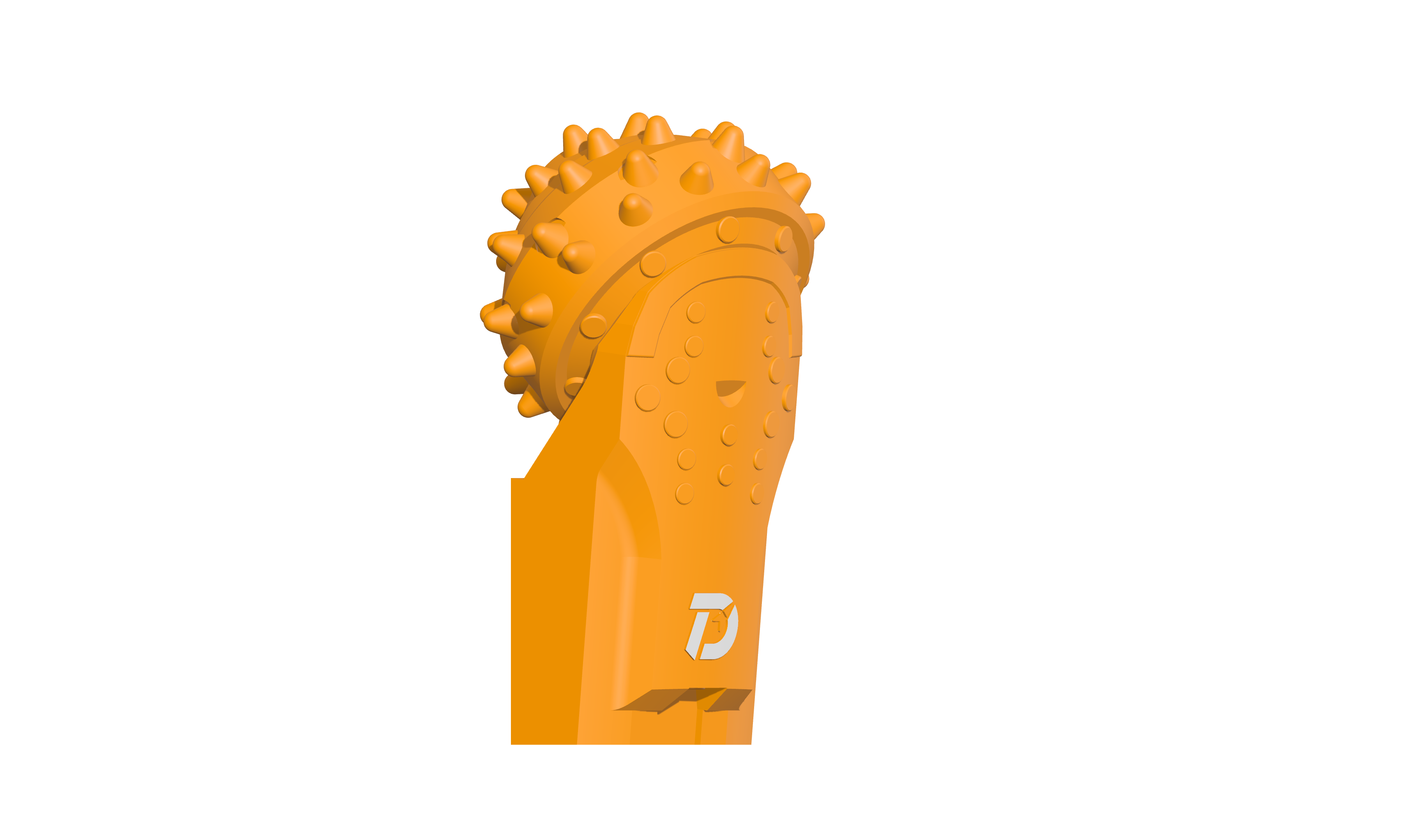
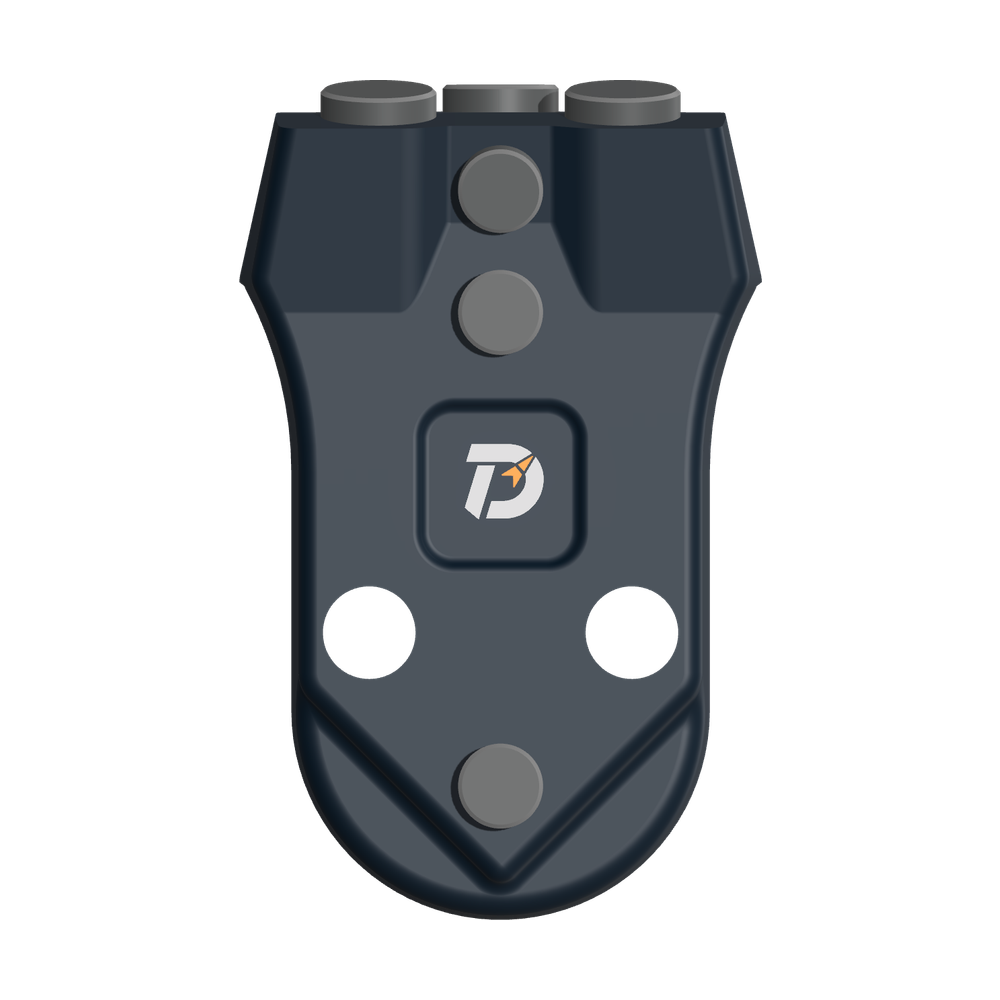
 WS39 casing tooth
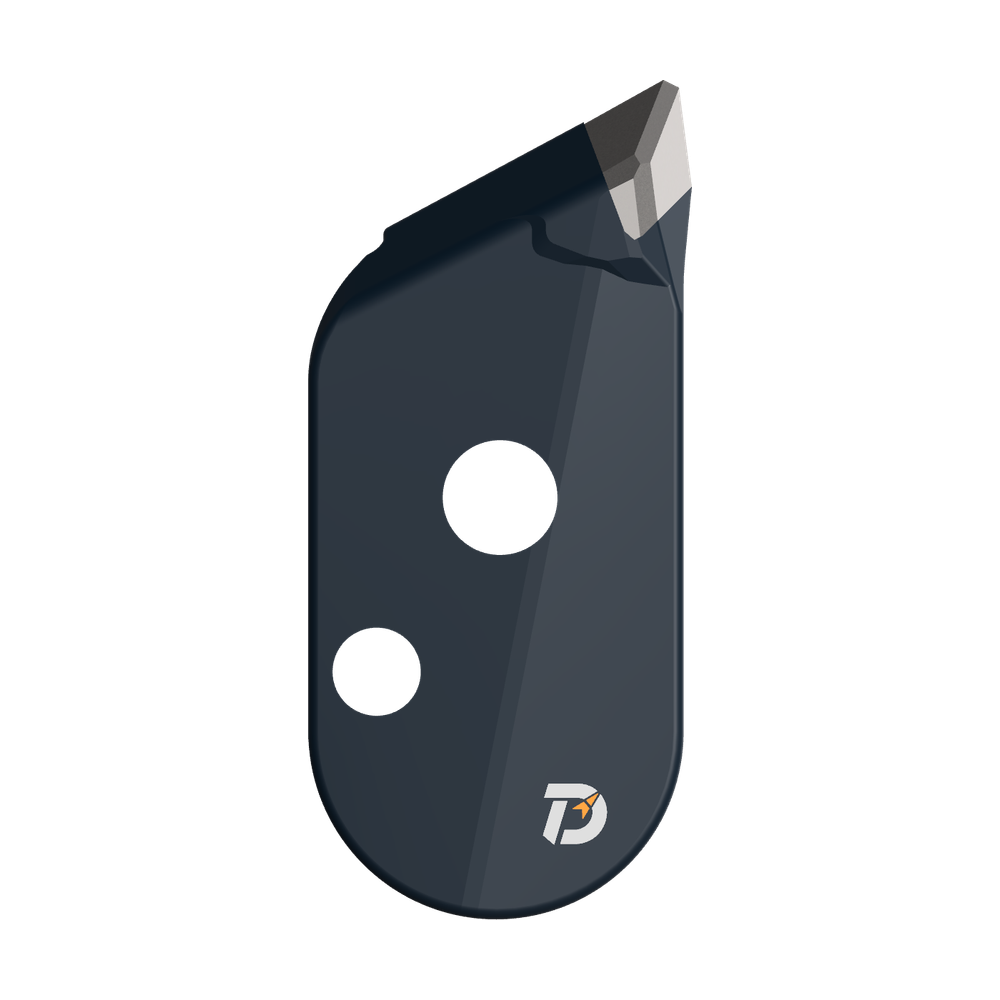 JM cutter tooth
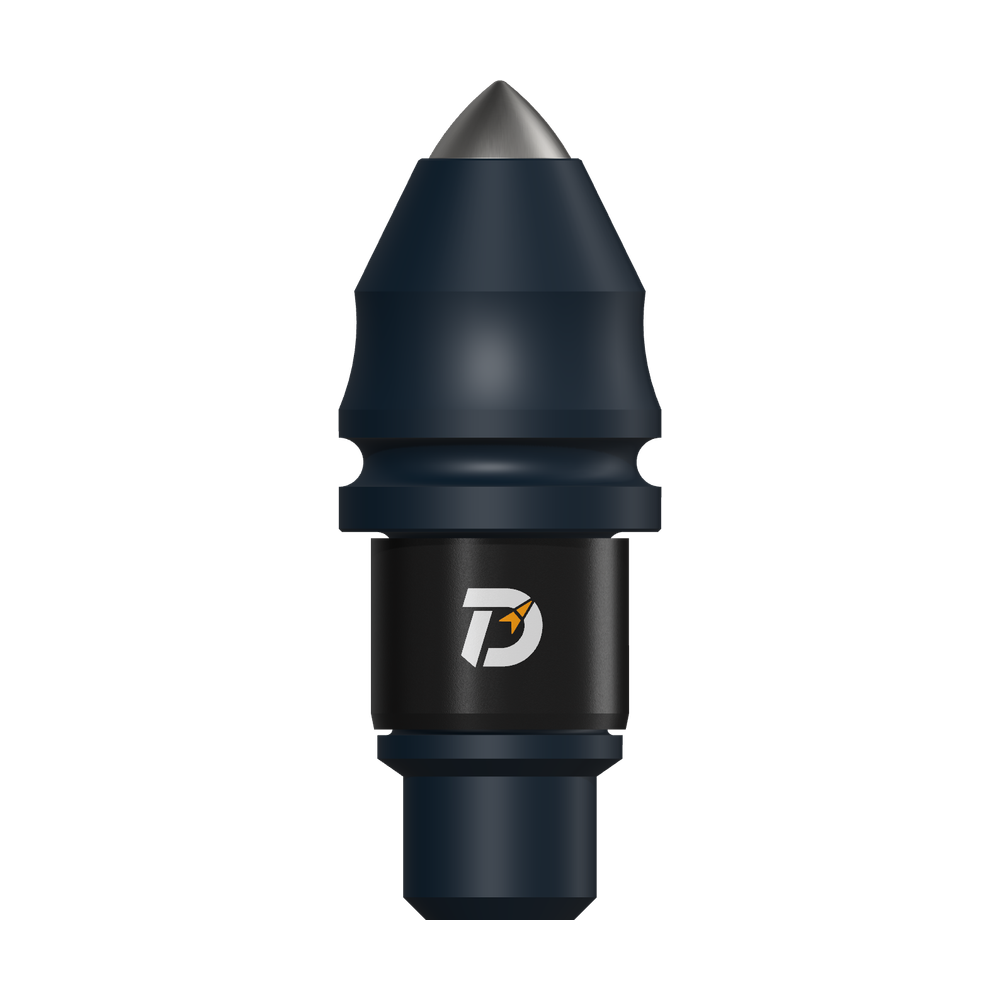 B47K22 bullet tooth
Jieyang · 800 mm rotary piling · 5–9 June 2025
High-spiral core barrel tested in granite.
DRILLNOVA · Field report · Updated
The customer was concerned about heavy roller-bit wear and accumulated cuttings. We designed and manufactured an 800 mm high-spiral core barrel with revised cutter spacing, then followed its use with the site crew.
The trial brought encouraging feedback on cuttings discharge, a reported response to operating adjustments and a clear next step for core recovery. Here is how the design was tested, what came out of the hole and what the records showed.
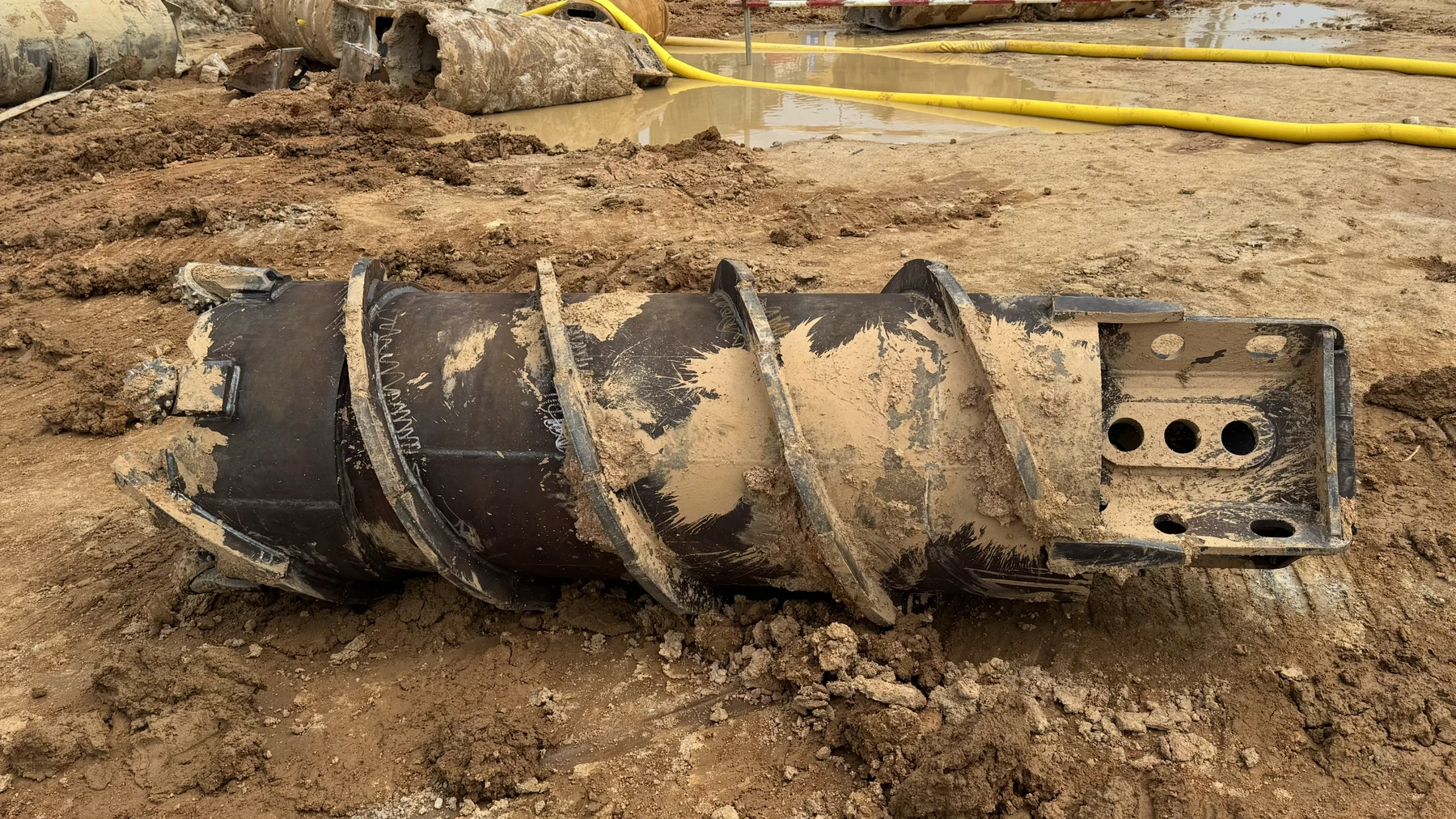
A barrel designed around the customer’s problem.
The site had small-diameter piles with substantial rock drilling. Existing guides were heavily worn, and the review found periods of thick or insufficient slurry and material accumulating around the cutting system. The customer needed a practical response to short roller-bit life, rather than another replacement supplied without investigating its use.
Our trial design combined a higher spiral with revised spacing around the roller bits. The purpose was to help move cuttings away from the cutting face and improve slurry movement, with better penetration and service life as the goals to test.
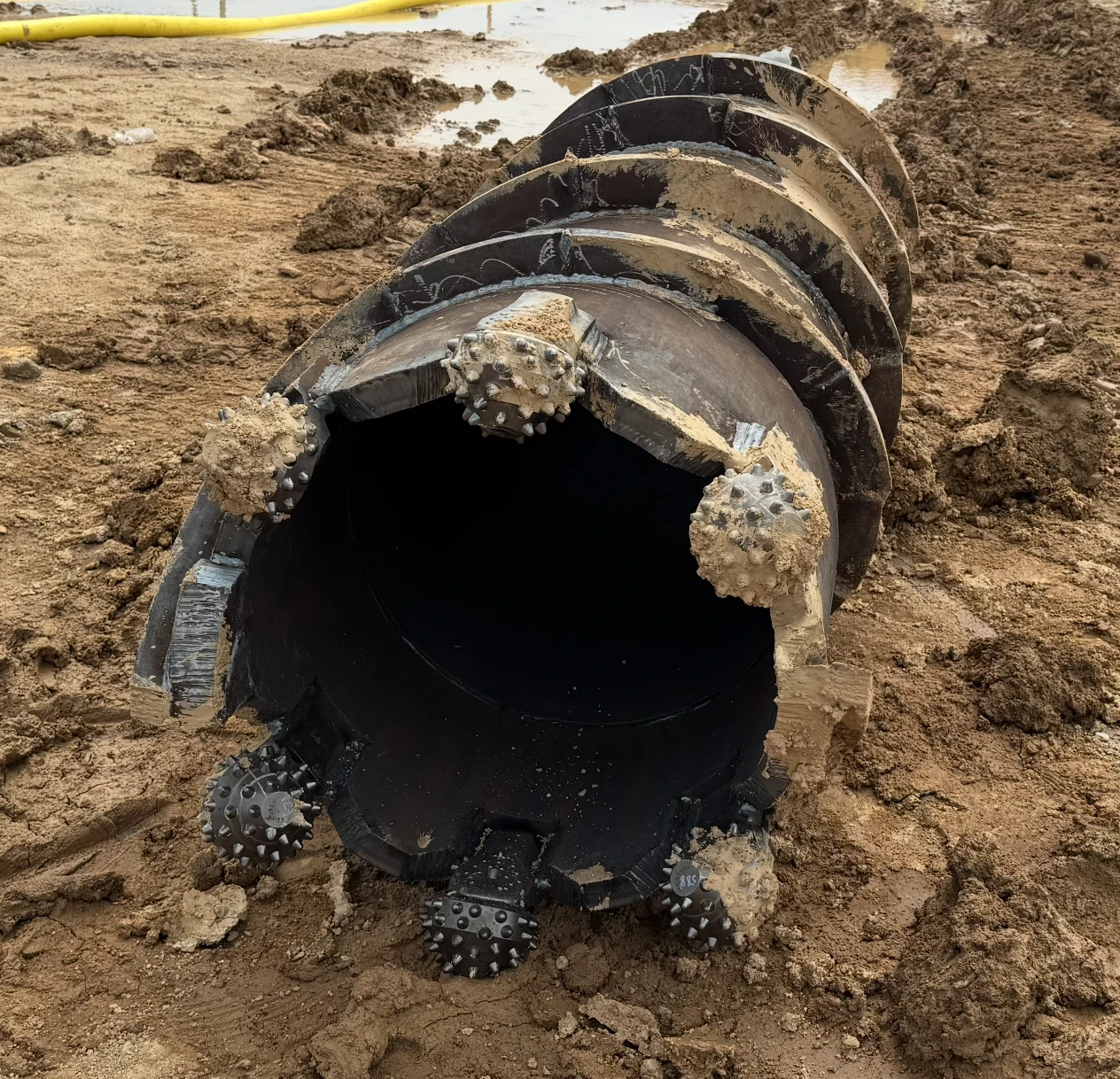
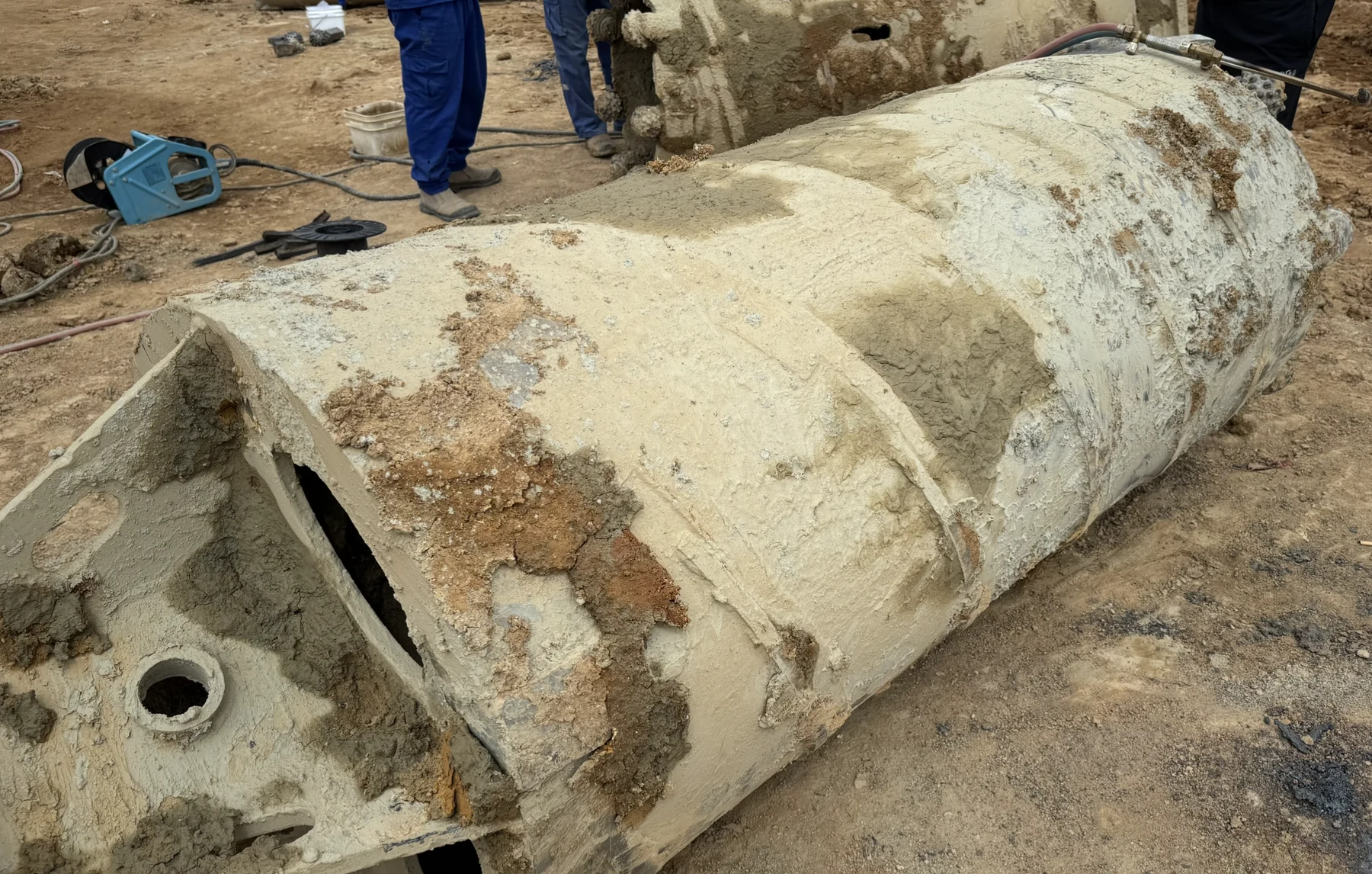
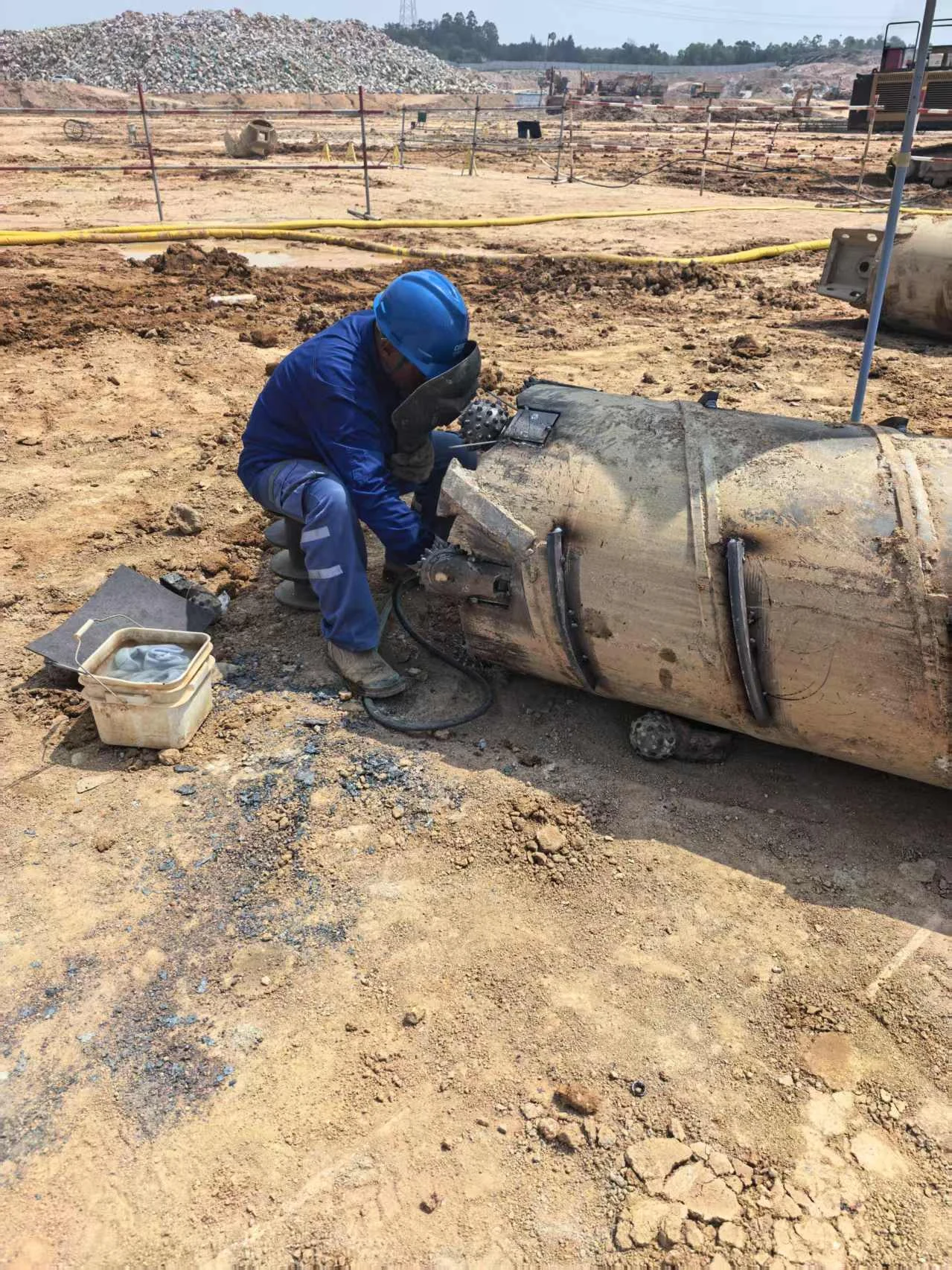
What the team found on the existing site tools
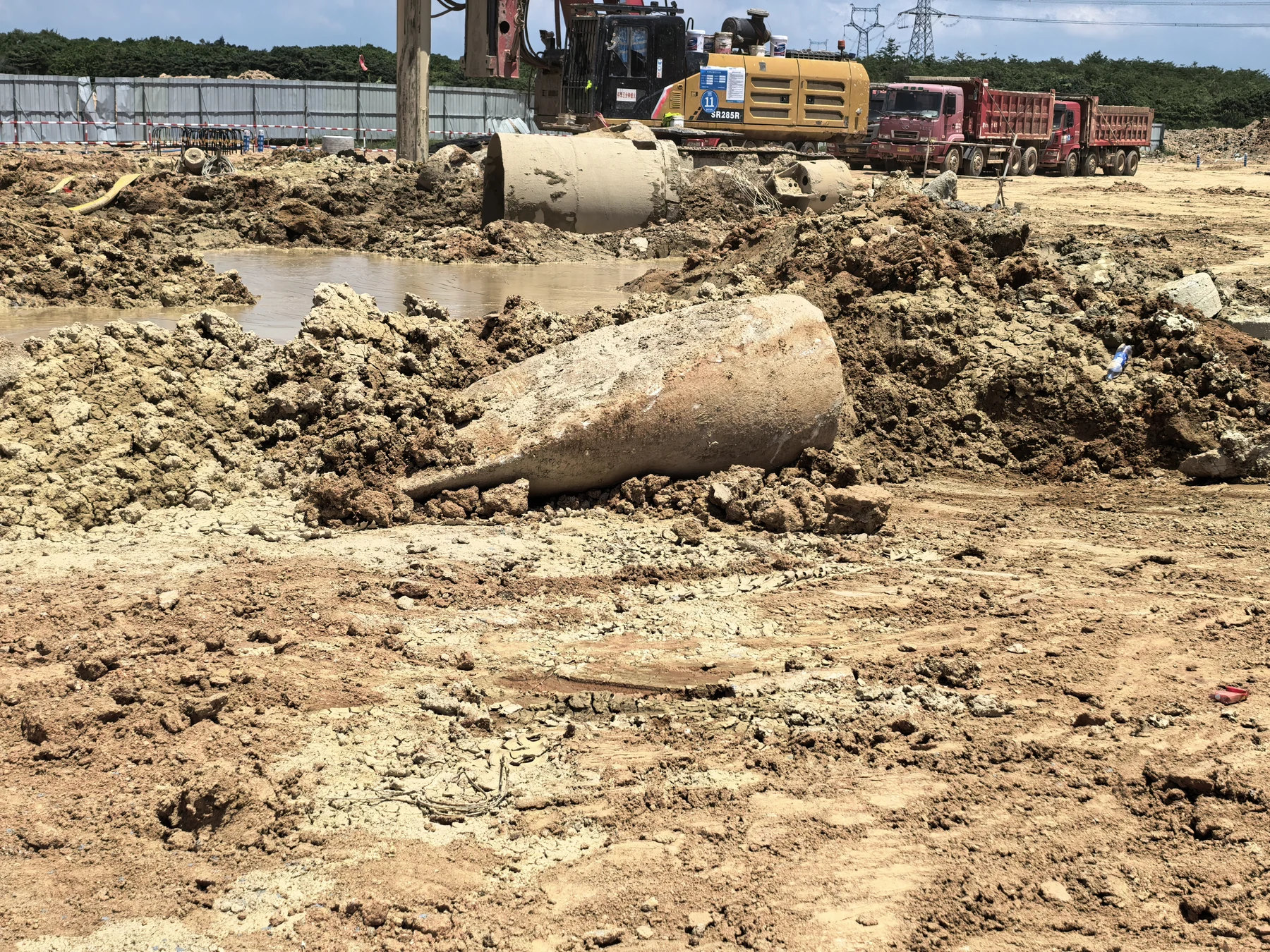
These are older conventional barrels inspected during the wider visit, not the new high-spiral trial barrel. Worn guides and replacement work helped explain why the review covered the steelwork, slurry and operating practice together.
Understand the rock before judging the tool.
The site account describes dense granite, with boulders, inclined rock faces and soil or sand interlayers. Conditions changed between nearby piles. The team examined recovered material alongside the pile log, because vibration, cutting response and core recovery depended on what each hole encountered.
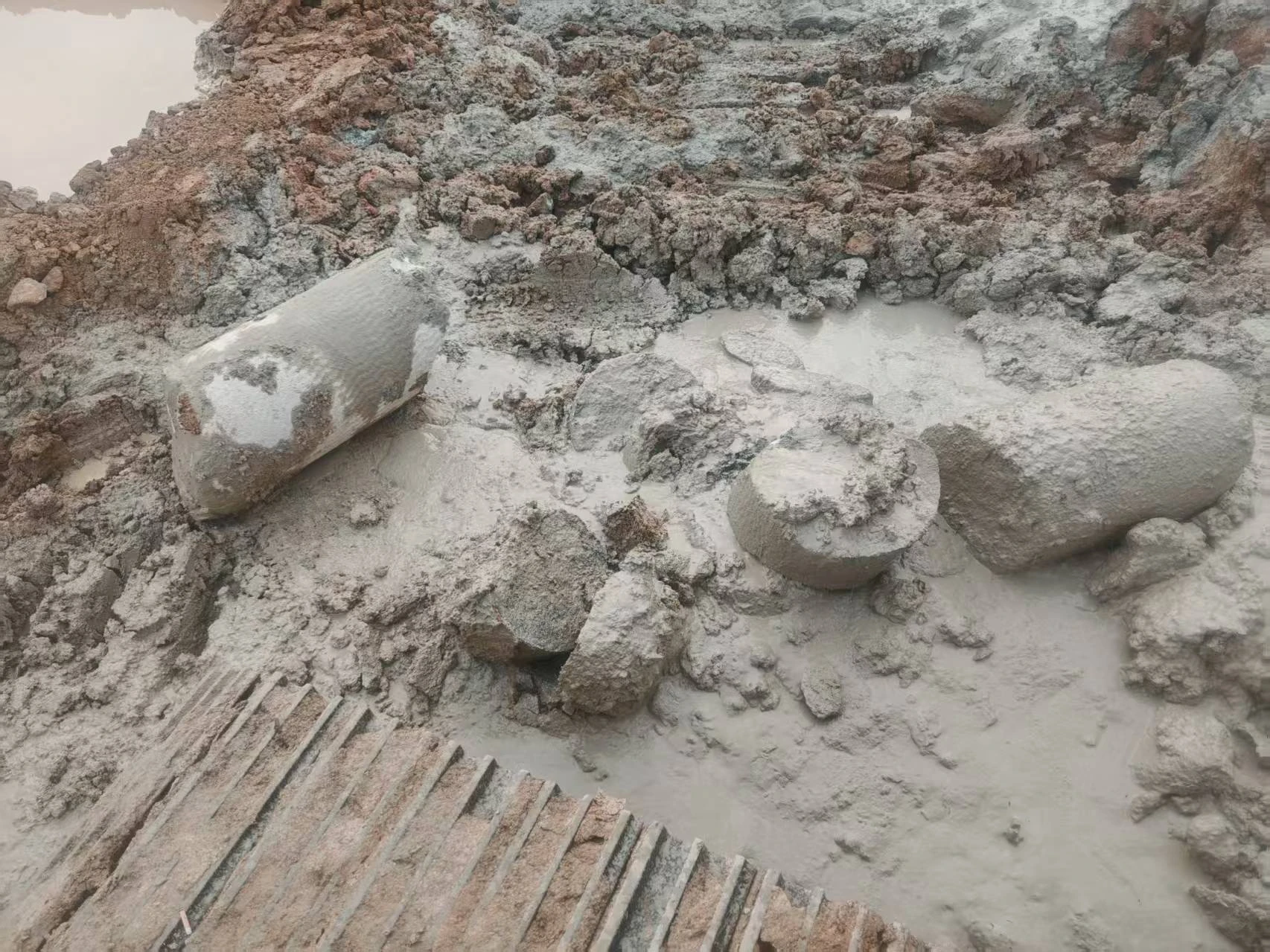
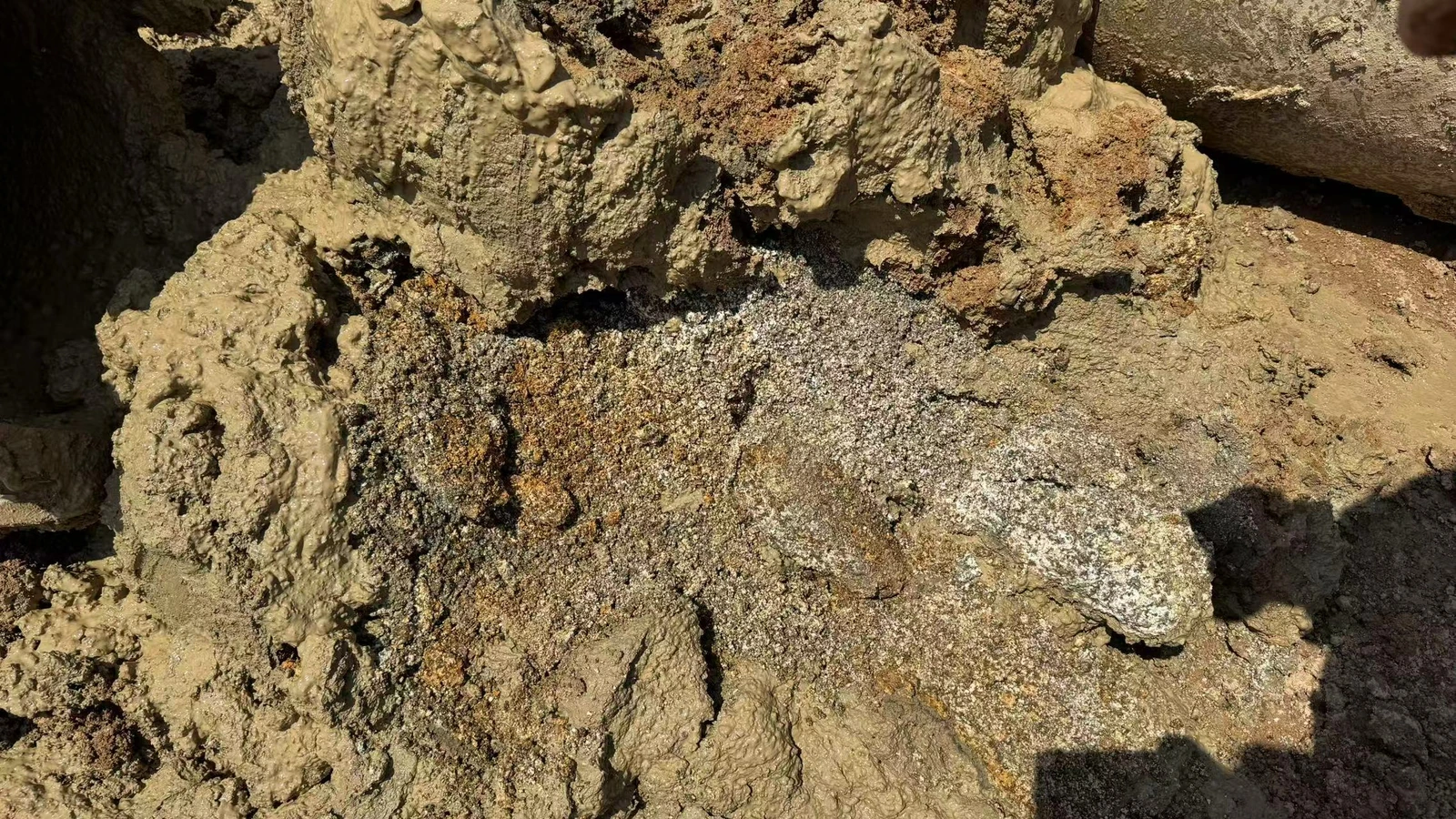
Two tested site samples
| Sample | Recorded strength | Moisture condition |
|---|---|---|
| Rock sample 1 | 92.2 MPa | Natural |
| Rock sample 2 | 129 MPa | Natural |
These are individual results for two tested samples. Sampling depths were not entered, so the values are not assigned to every photograph or to the full drilling interval.
Follow the barrel from first entry into drilling.
First check: was the new barrel cutting or reaming?
On 5 June, the first lowering was into a smaller hole already cut with a bullet-tooth barrel. After about 1 m of reaming, the team discussed the fit with the crew and moved the trial to a fresh pile. That decision kept the first fit-up operation separate from new rock penetration.
Record the operating response with the crew
The follow-up tracked lowering, cutting, lifting and re-entry. For example, the 5–6 June overnight entry recorded 5.83 m of advance, with head speed measured at 14–15 r/min. On 6 June another rig drilled under assembly weight without additional crowd. These observations helped the discussion move from a general wear complaint to the actual use of the barrel.
The site summary reports that combined feed and rotary-speed adjustments raised the observed pure-cutting rate from the earlier 0.2–0.3 m/h to about 0.35 m/h. It was an encouraging field response, though below the team’s target. The readings below show the different rigs and stages; they are not a single operating recipe.
Recorded rig settings and operating stages
| Stage / rig | Depth or work, m | Head speed, r/min | P4 indication* | Field action |
|---|---|---|---|---|
| 5 June · A3-11-2 / machine 18 | ≈1 m reaming; exact endpoints not recorded | 12 | Not recorded | Enlarging the earlier bullet-tooth hole; then move to a fresh pile. |
| 5–6 June · ZH-16 / machine 3 | 8.90 → 14.73 m | 14–15, field-measured | Not recorded | Overnight rock drilling; tool lifts recorded at 20:55 and 22:04. |
| 6 June, 11:11 · ZH-30 / machine 13 | 9.94 m checkpoint | Not recorded | Not recorded | No additional crowd applied; drilling under assembly weight. |
| 7 June, 11:06 · Zz-K4G2-16 / machine 10 | 12.32 m checkpoint | 9 | 2.7; unit omitted | E mode, steady rock entry; wire-rope entry 5 t and Y-axis entry “0.2 -0.3” (sign/range and unit unconfirmed). |
P4 is a hydraulic feed-pressure indication, not a direct measurement of load at the cutting face. Readings with missing units are retained as recorded. Read the separate adjustment summary and proposed next check.
From the recovery attempt to the rock brought up.
On the morning of 7 June, machine 10 advanced from 16.46 to 17.03 m in the recorded pile entry. The crew reported high cutter temperature and strong vibration near the end of the run. The following recovery sequence shows the actual material brought to the surface.
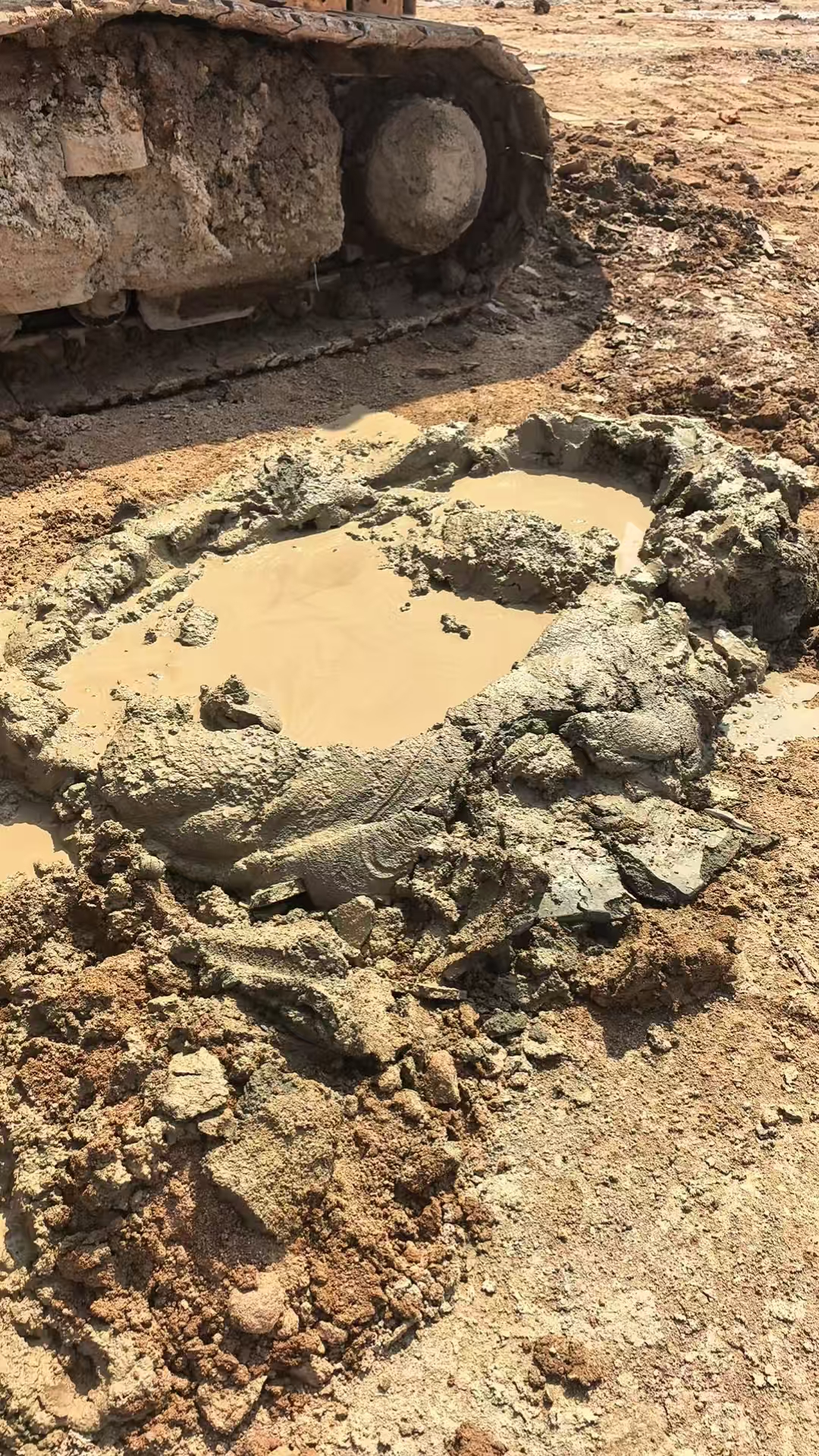
The recovery tool brought up mud. Discharged material is visible beside the rig.
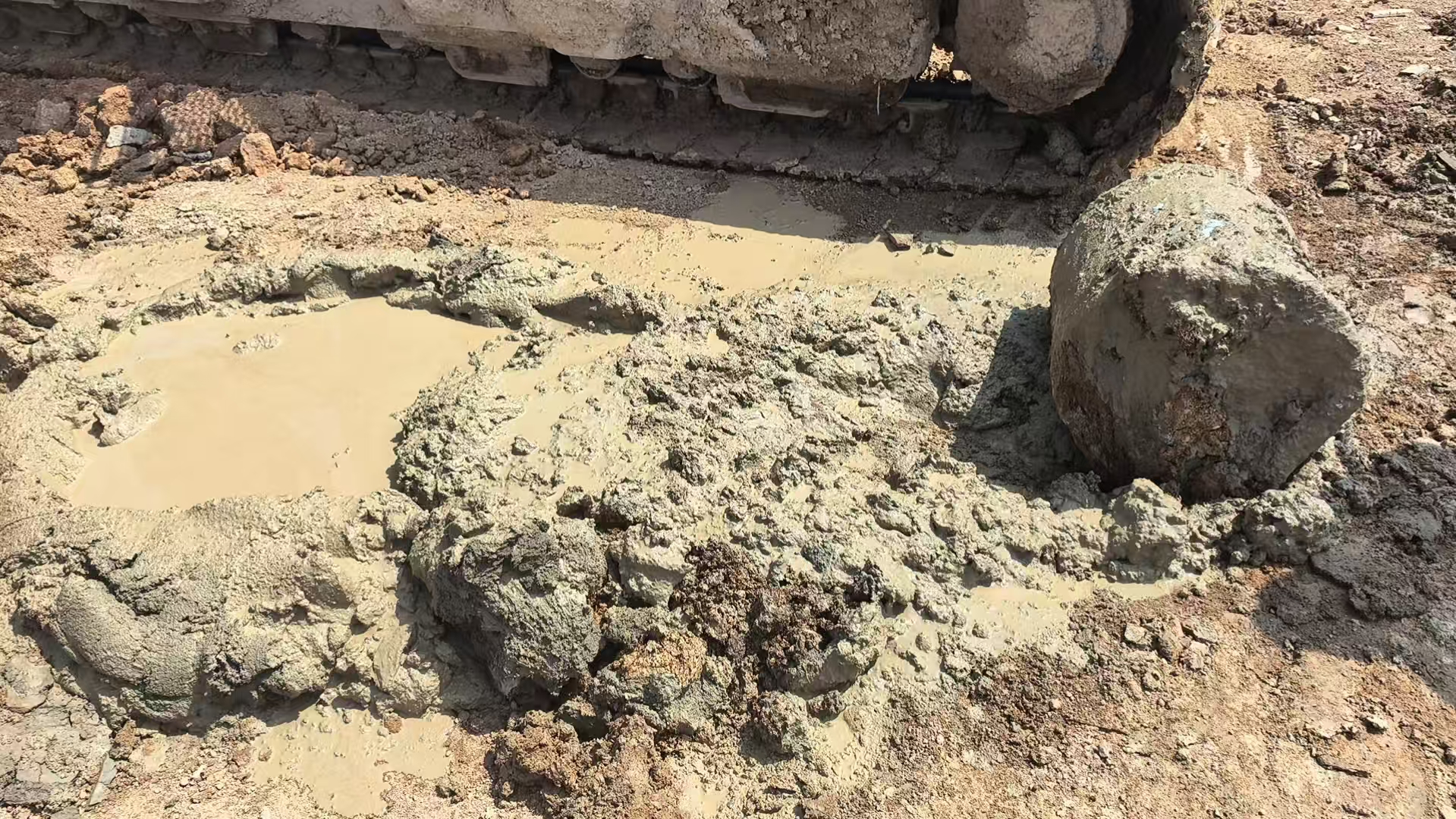
Rock was recovered beside the rig; the site note describes inclined rock.
The second attempt produced a visible rock recovery result. The first-attempt video below shows the preceding mud discharge. Together, the two attempts show why recovery performance needed to be assessed separately from cutting.
What this footage shows
The recovery tool is lifted and wet material is released beside the rig. This footage belongs to the first attempt in the machine-10 record. The photograph in the two-attempt comparison above shows the rock recovered on the second attempt.
What the recovery sequence told us
The roller-bit barrel cut the rock; a separate recovery tool was used to grip and remove it. An earlier overnight entry had already brought the operator’s feedback that cuttings discharge was good but that recovering a core after a short advance was difficult. This showed why the next improvement needed to include core gripping and unloading, alongside the high-spiral cutting barrel.
The team proposed reviewing the recovery tool’s internal gripping arrangement and discharge geometry. That was a follow-up design recommendation; this trial does not record a completed recovery-tool redesign.
Keep the roller-bit checks with the drilling record.
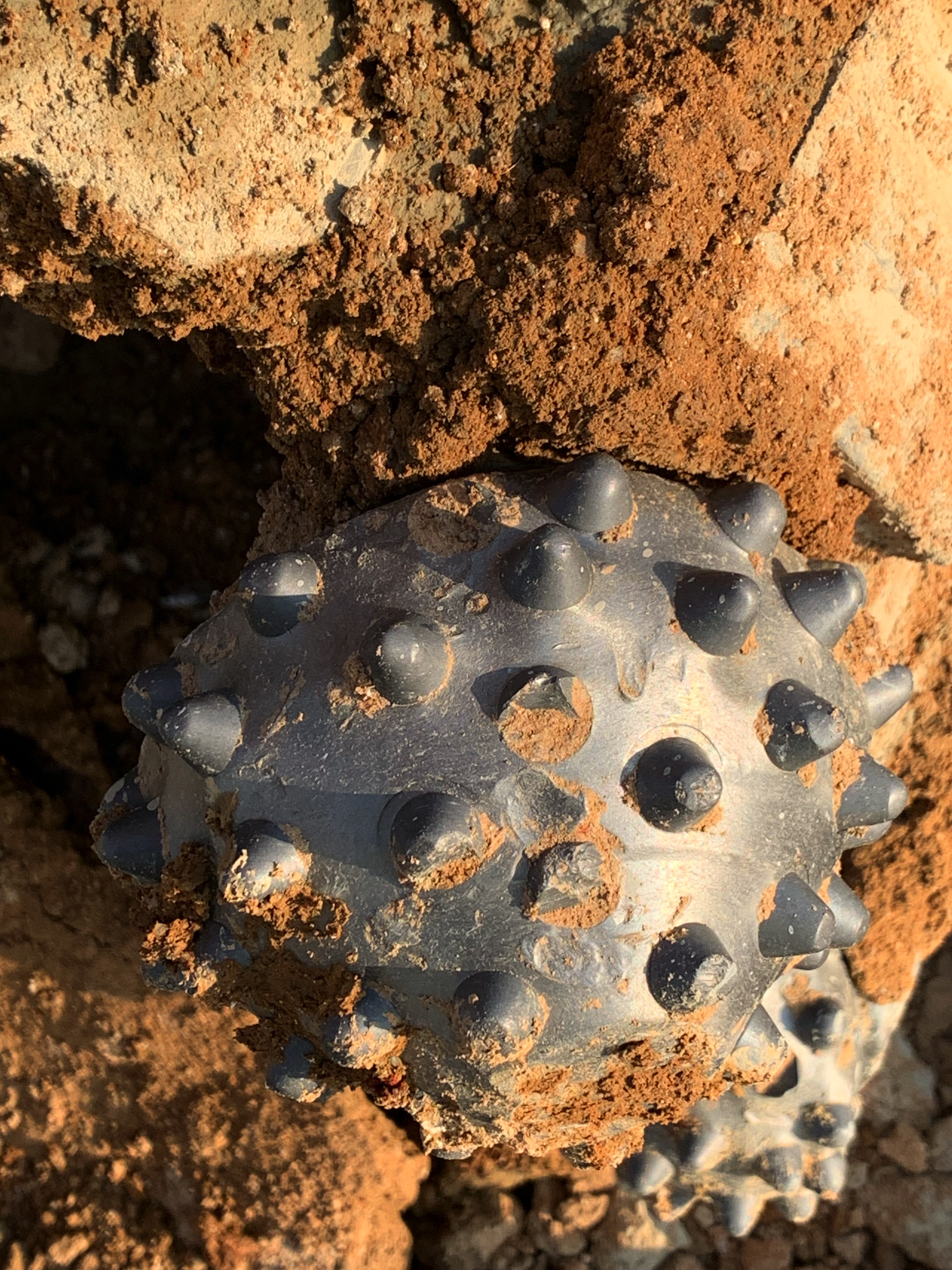
Follow-up continued beyond the first run. The team photographed the cutters on 7 June at 17:00, then recorded hand checks of cone rotation at 09:30 on 8 June. These inspections formed part of the trial, alongside the running depth record and conversations with the operators.
What this footage shows
The inspection moves between several cutters, showing attached material and hand checks of cone rotation. This is a dated inspection of the barrel; individual cutter IDs were not recorded, so it does not prove the same cutter appears in both dated views.
The longest detailed pile entry ran from 6.85 to 20.93 m between 7 and 9 June: 14.08 m of recorded advance, including core-recovery events. It demonstrates continued field use and follow-up. It is a single-pile record, not a measured lifetime for an unchanged set of roller bits.
What did the trial deliver for the customer?
A purpose-built barrel, encouraging discharge feedback and a practical improvement plan grounded in site use. The customer’s wear problem was investigated through the complete cycle: tool geometry, rig operation, cuttings, core recovery and cutter condition.
Good cuttings discharge was reported
During the 6–7 June overnight entry, the operator described the new barrel’s discharge as good. That feedback supports the high-spiral design direction for this site. The same conversation identified core recovery after a short advance as a remaining constraint.
Operating adjustments produced a positive response
The site summary reports about 0.35 m/h after feed and speed adjustments, compared with the earlier 0.2–0.3 m/h described in the review. Several settings changed together, so this is a reported operating response, not a controlled comparison proving the high spiral alone increased penetration.
The next work was defined with the field evidence
The review identified three priorities: maintain the cuttings guides and slurry, improve core gripping and unloading, and keep each barrel’s usage and cutter-change record together. The dated inspections and eight pile entries provide a basis for that next trial. A verified service-life increase remains to be established.
For another contractor facing the same symptoms, the value is a tool and support plan matched to the site: review the existing assembly, choose the design changes, discuss operation with the crew and follow the results through drilling and inspection.
Field records
Expand the original pile entries, operating notes and inspection follow-up. Clock readings and recorded events remain together, including lifting, recovery and interruptions.
Trial configuration and rigs
| Item | Recorded detail |
|---|---|
| Trial tool | 800 mm high-spiral roller-bit core barrel with revised cutter spacing |
| Detailed trial period | 5–9 June 2025; 8 named pile entries |
| Rigs in those entries | Machines 18, 3 and 13: XCMG XR360; machine 10: Sany SR360 |
| Wider site | 800 and 1,000 mm piles; 16 rigs listed in the site overview |
| Assembly tracking | Tools moved between rigs; a further reaming transfer to machine 12 is noted separately |
Open all eight pile entries
| Pile / machine | Date | Recorded advance | Operation / observation |
|---|---|---|---|
| A3-11-2 / 18 | 5 June | ≈1.00 m | Reaming a hole made by a bullet-tooth barrel; about 10 minutes in the summary |
| ZH-16 / 3 | 5–6 June | 5.83 m | Depth 8.90 → 14.73 m; field-measured head speed 14–15 r/min |
| ZH-30 / 13 | 6 June | 2.50 m | Depth 8.44 → 10.94 m; stops and lifting recorded |
| Zz-K4G2-17 / 10 | 6 June | 0.43 m | Depth 12.58 → 13.01 m; slight vibration recorded |
| Zz-K4G2-8 / 10 | 6–7 June | 2.04 m | Depth 11.06 → 13.10 m; inclined rock reported |
| Zz-K5G1-5 / 10 | 7 June | 0.57 m | Depth 16.46 → 17.03 m; stronger vibration and high tool temperature reported |
| Zz-K4G2-16 / 10 | 7 June | 1.02 m | Depth 12.16 → 13.18 m; core recovery and moving to another pile |
| A1-11-2 / 10 | 7–9 June | 14.08 m | Depth 6.85 → 20.93 m; lifting, core recovery and pauses logged |
The first row is reaming. Later rows include different ground and sequences; 14.08 m belongs to one pile entry.
Elapsed windows and cumulative totals
| Pile | Start → end | Calculated elapsed-window rate |
|---|---|---|
| ZH-16 | 19:58 → next day 06:08; 5.83 m / 610 min | 0.57 m/h |
| ZH-30 | 09:30 → 15:20; 2.50 m / 350 min | 0.43 m/h |
| Figure | What it includes |
|---|---|
| 27.47 m calculated from the 8 rows above | Includes the approximately 1 m initial reaming entry |
| 28.47 m reported cumulative in the detailed log | The log also notes reaming from about 5 m to 6 m on machine 12, without a separate exact row |
| 21.61 m in the overview table | An earlier/incomplete running total; it does not match the last detailed update |
Calculated elapsed-window rate = recorded depth advance × 60 ÷ elapsed minutes. The windows include lifting or pauses. The 28.47 m is the log’s reported running total. The transfer record and individual replacements remain unresolved; this is not an unchanged-set service-life figure.
Recorded observations and proposed follow-up
| Observation | Working explanation / next check | Response status |
|---|---|---|
| First hole too small for the new barrel | Confirm the swept cutting diameter before introducing a different tool | Moved to a fresh pile after initial reaming |
| Ground changed sharply between holes | Separate intact rock, boulders/interlayers and clearing in the log | Ground and recovered-core observations recorded |
| Worn guides on existing tools; thick or insufficient fluid at times | Inspect guide condition and clearing/fluid practice | Maintenance and fluid-review actions proposed |
| Tools shared among rigs; new and used components mixed on site | Assign tool/cutter IDs and start a new mileage segment at replacement | More consistent tool and replacement records proposed |
The parameter adjustment described in the site summary
| Field | Before the adjustment, as reported | After the adjustment, as reported |
|---|---|---|
| P4 hydraulic-pressure indication | 2–3; unit not given | 5–6; unit not given |
| Head speed | 10–12 r/min | Approximately 15 r/min |
| Y-axis inclination | 0.3° | 0.6° |
| Rate described by the author as pure cutting | 0.2–0.3 m/h | 0.35 m/h |
The adjustment is described in the site summary without a paired pile ID or start/end interval. It reports a modest change in cutting rate after several settings changed together; it does not establish a transferable setting or a measured percentage improvement. The separate 0.4–0.5 m/h reference was experience from other sites, not this trial. Manual rope payout was proposed for a later check.
Depth checkpoints, rig by rig
Open a pile to see the original clock readings, depths and work events. Rates below are the source-entered values, not newly calculated pure-cutting rates. Lifting, recovery, meal breaks and rig moves remain visible. A dash means the field was blank in the source.
ZH-16 · machine 3 · 5–6 June 2025 · 8.90 → 14.73 m
| Local time | Depth, m | Source-entered rate, m/h | Source-entered pile advance, m | Recorded event |
|---|---|---|---|---|
| 19:58 | 8.90 | — | — | Barrel lowered |
| 20:36 | 9.60 | 1.11 | 0.7 | — |
| 20:55 | 10.04 | 1.39 | 1.14 | Tool lifted |
| 21:25 | 10.72 | 1.36 | 1.82 | — |
| 21:55 | 11.32 | 1.2 | 2.42 | — |
| 22:04 | 11.66 | 2.3 | 2.76 | Tool lifted |
| 22:32 | 11.96 | 0.64 | 3.06 | Barrel lowered |
| 23:05 | 12.34 | 0.69 | 3.44 | — |
| 0:17 | 12.64 | 0.54 | 3.74 | — |
| 1:20 | 13.06 | 0.4 | 4.16 | — |
| 2:33 | 13.54 | 0.39 | 4.64 | — |
| 6:08 | 14.73 | 0.33 | 5.83 | Pile completed |
Field-measured head speed: 14–15 r/min. The separate lowering note says 19:57; the first depth row is 19:58.
ZH-30 · machine 13 · 6 June 2025 · 8.44 → 10.94 m
| Local time | Depth, m | Source-entered rate, m/h | Source-entered pile advance, m | Recorded event |
|---|---|---|---|---|
| 9:30 | 8.44 | — | — | Barrel lowered |
| 10:15 | 9.76 | 1.76 | 1.32 | Tool lifted |
| 10:37 | 9.82 | 0.16 | 1.38 | Barrel lowered |
| 11:11 | 9.94 | 0.21 | 1.5 | No additional crowd applied; drilling under assembly weight |
| 11:30 | 10:00 (as written)* | 0.19 | 1.56 | Drilling stopped |
| 13:04 | 10.34 | — | 1.9 | Tool lifted |
| 13:59 | 10.60 | 0.28 | 2.16 | Tool lifted |
| 15:00 | 10.84 | 0.24 | 2.4 | — |
| 15:20 | 10.94 | 0.3 | 2.5 | Pile completed |
At 11:11 the log records no additional crowd. *The 11:30 depth cell is written “10:00”; it has not been silently changed to a decimal.
Zz-K4G2-17 · machine 10 · 6 June 2025 · 12.58 → 13.01 m
| Local time | Depth, m | Source-entered rate, m/h | Source-entered pile advance, m | Recorded event |
|---|---|---|---|---|
| 16:34 | 12.58 | — | — | Barrel lowered |
| 17:13 | 12.75 | 0.26 | 0.17 | Slight vibration; broken rather than intact rock suspected |
| 17:25 | 12.83 | 0.4 | 0.25 | Tool lifted |
| 17:29 | 12.83 | — | 0.25 | Barrel lowered |
| 17:51 | 13.01 | 0.49 | 0.43 | Pile completed |
The 17:25 lift and 17:29 lowering remain separate events.
Zz-K4G2-8 · machine 10 · 6–7 June 2025 · 11.06 → 13.10 m
| Local time | Depth, m | Source-entered rate, m/h | Source-entered pile advance, m | Recorded event |
|---|---|---|---|---|
| 20:17 | 11.06 | — | — | Barrel lowered |
| 20:59 | 11.08 | 0.029 | 0.02 | — |
| 21:42 | 11.32 | 0.33 | 0.26 | Tool lifted |
| 23:20 | 11.77 | 0.28 | 0.71 | — |
| 2:41 | 12.69 | 0.27 | 1.63 | — |
| 3:34 | 13.1 | 0.46 | 2.04 | Pile completed |
The table starts at 20:17 / 11.06 m. A separate operator account says a change from bucket to roller barrel at 23:06 / 10.1 m; that conflicting account is not merged into this sequence.
Zz-K5G1-5 · machine 10 · 7 June 2025 · 16.46 → 17.03 m
View the two recovery attempts and the material brought up
Compare with the first recovery attempt and site video
| Local time | Depth, m | Source-entered rate, m/h | Source-entered pile advance, m | Recorded event |
|---|---|---|---|---|
| 8:30 | 16.46 | — | — | Barrel lowered |
| 9:09 | 16.89 | 0.66 | 0.43 | — |
| 9:20 | 16.95 | 0.33 | 0.49 | Stronger vibration |
| 9:36 | 17.03 | 0.3 | 0.57 | Tool lifted |
The first and second core-recovery photographs and original first-attempt video belong to this pile entry.
Zz-K4G2-16 · machine 10 · 7 June 2025 · 12.16 → 13.18 m
| Local time | Depth, m | Source-entered rate, m/h | Source-entered pile advance, m | Recorded event |
|---|---|---|---|---|
| 10:52 | 12.16 | — | — | Rock entry began |
| 11:06 | 12.32 | 0.69 | 0.16 | E mode; steady rock entry; 9 r/min; wire-rope entry 5 t; P4 2.7 (unit omitted); Y-axis entry “0.2 -0.3” (sign/range and unit unconfirmed) |
| 11:29 | 12:46 (as written)* | 0.37 | 0.3 | Drilling stopped |
| 11:50 | — | — | — | Barrel lowered |
| 13:57 | 13.18 | — | 1.02 | Core recovery; move to another pile |
*The 11:29 depth cell is written “12:46”. The operator later reported a display reset after lunch and readings roughly 0.1 m below actual depth; the original readings remain unchanged.
A1-11-2 · machine 10 · 7–9 June 2025 · 6.85 → 20.93 m
| Local time | Depth, m | Source-entered rate, m/h | Source-entered pile advance, m | Recorded event |
|---|---|---|---|---|
| 18:04 | 6.85 | — | — | — |
| 18:27 | 7.12 | 0.7 | 0.27 | — |
| 18:57 | 7.24 | 0.24 | 0.39 | — |
| 20:11 | 7.40 | 0.13 | 0.55 | Some roller-bit jumping recorded |
| 21:33 | 7.67 | 0.2 | 0.82 | Tool lifted |
| 23:25 | 8.24 | 0.3 | 1.39 | — |
| 00:56 | 8.65 | 0.27 | 1.8 | Core recovery |
| 2:42 | 9.48 | 0.47 | 2.63 | — |
| 3:55 | 9.99 | 0.42 | 3.14 | — |
| 7:04 | 10.63 | 0.2 | 3.78 | — |
| 9:10 | 11.06 | 0.2 | 4.21 | Core recovery |
| 9:28 | 11.14 | 0.27 | 4.29 | Barrel lowered |
| 10:13 | 11.40 | 0.35 | 4.55 | Lift / core recovery |
| 10:54 | 11.52 | 0.18 | 4.67 | — |
| 11:30-11:50 | — | — | — | Tool lifted; operator meal break |
| 12:45 | 11.75 | — | 4.9 | — |
| 12:51 | — | — | — | Rig moved; drilling stopped |
| 13:01 | — | — | — | Barrel lowered |
| 13:27 | 11.95 | — | 5.1 | — |
| 13:38 | 11.99 | 0.22 | 5.14 | Tool lifted |
| 13:53 | 11.99 | — | — | Drilling resumed |
| 14:15 | 12.10 | 0.3 | 5.25 | Rotary-speed entry: 14 r/h as written; unit needs confirmation |
| 14:52 | 12.30 | 0.32 | 5.45 | — |
| 15:01 | 12.34 | 0.27 | — | Tool lifted |
| 15:10 | — | — | — | Drilling resumed |
| 16:18 | 12.79 | — | — | — |
| 16:24 | 12.83 | 0.4 | 5.98 | — |
| 16:54 | 12.99 | 0.32 | 6.14 | Tool lifted |
| 17:26 | 12.99 | — | — | Lift / core recovery |
| 17:46 | 13.10 | 0.33 | 6.25 | — |
| 17:52 | — | — | — | Tool lifted; boulder layer possibly penetrated; roller barrel lowered again |
| 18:05 | 13.14 | — | 6.29 | — |
| 18:30 | 13.32 | 0.43 | 6.47 | — |
| 19:01 | 13.48 | 0.31 | 6.63 | — |
| 20:39 | 13.79 | 0.19 | 6.94 | — |
| 21:47 | 14.07 | 0.25 | 7.22 | — |
| 22:29 | 14.71 | 0.91 | 7.32 | Log reports inclined rock penetrated |
| 00:55 | 15.16 | 0.19 | 8.31 | — |
| 1:57 | 15.44 | 0.27 | 8.59 | — |
| 3:02 | 15.71 | 0.25 | 8.32 | — |
| 4:16 | 16.01 | 0.24 | 9.16 | — |
| 5:04 | 16.26 | 0.31 | 9.41 | — |
| 5:58 | 17.15 | 0.99 | 10.3 | — |
| 8:38 | 19.05 | 0.71 | 12.2 | — |
| 9:38 | 19.85 | 0.8 | 13 | — |
| 10:11 | 20.23 | 0.69 | 13.38 | — |
| 11:13 | 20.93 | 0.68 | 14.08 | Tool lifted |
Clock rows run across two midnights. The source-entered pile-advance values at 22:29 (7.32 m) and 03:02 (8.32 m) do not reconcile with depth minus 6.85 m. The 14:15 speed unit is written “14 r/h”; it is not converted into rpm.