
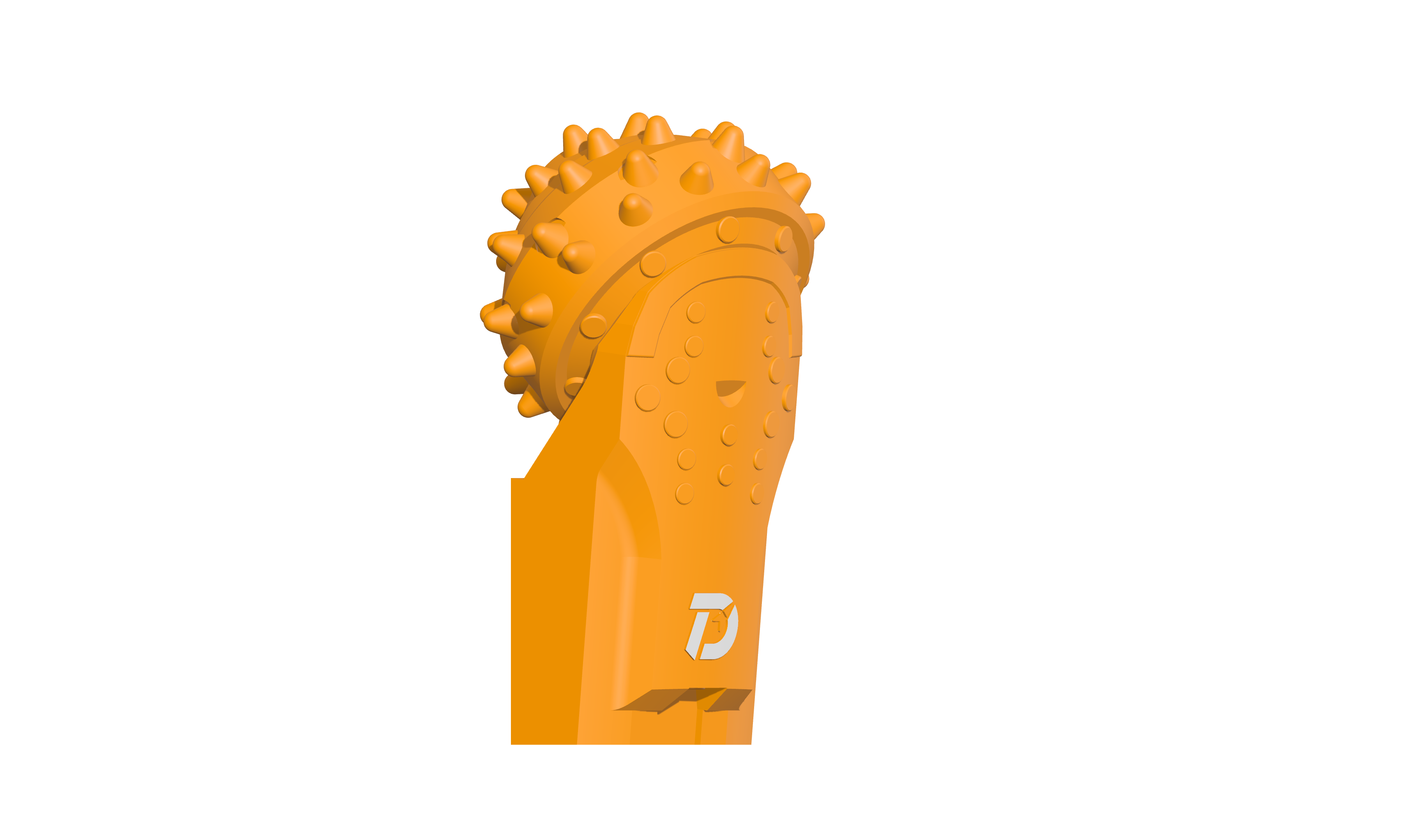
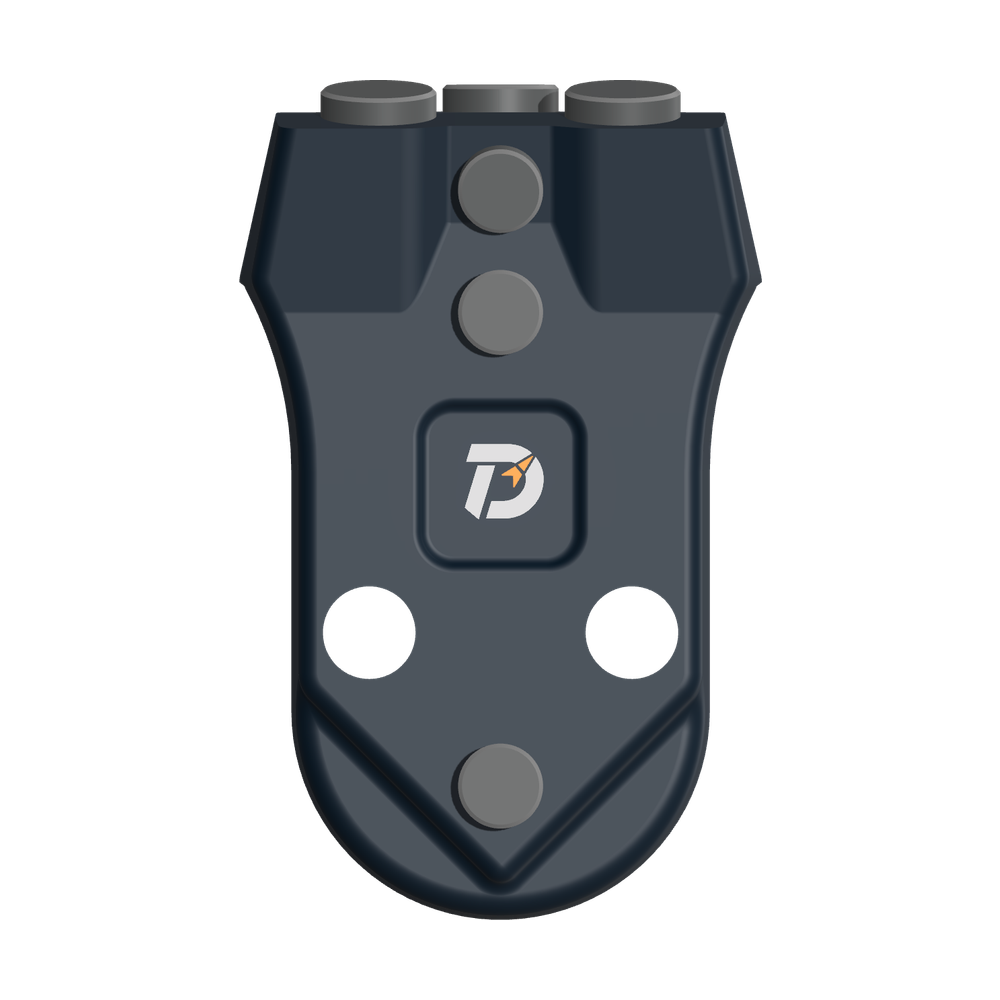
 WS39 casing tooth
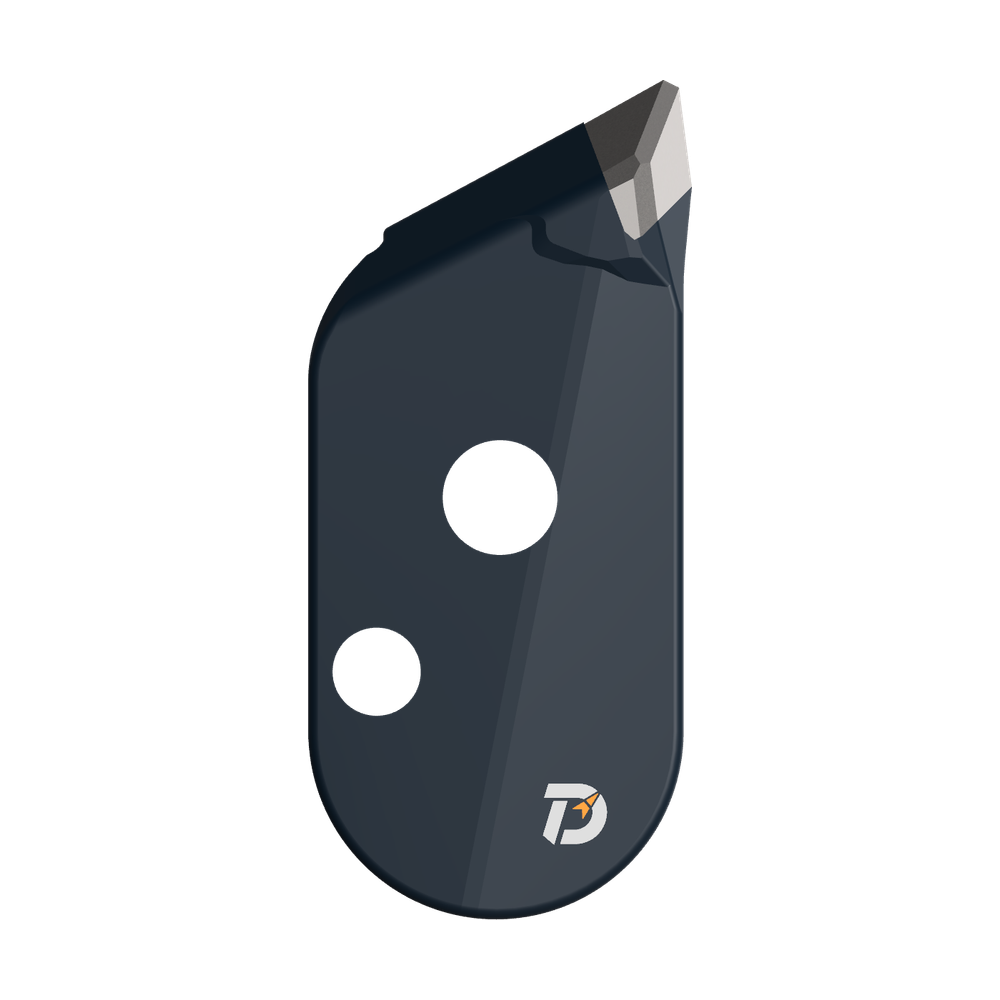 JM cutter tooth
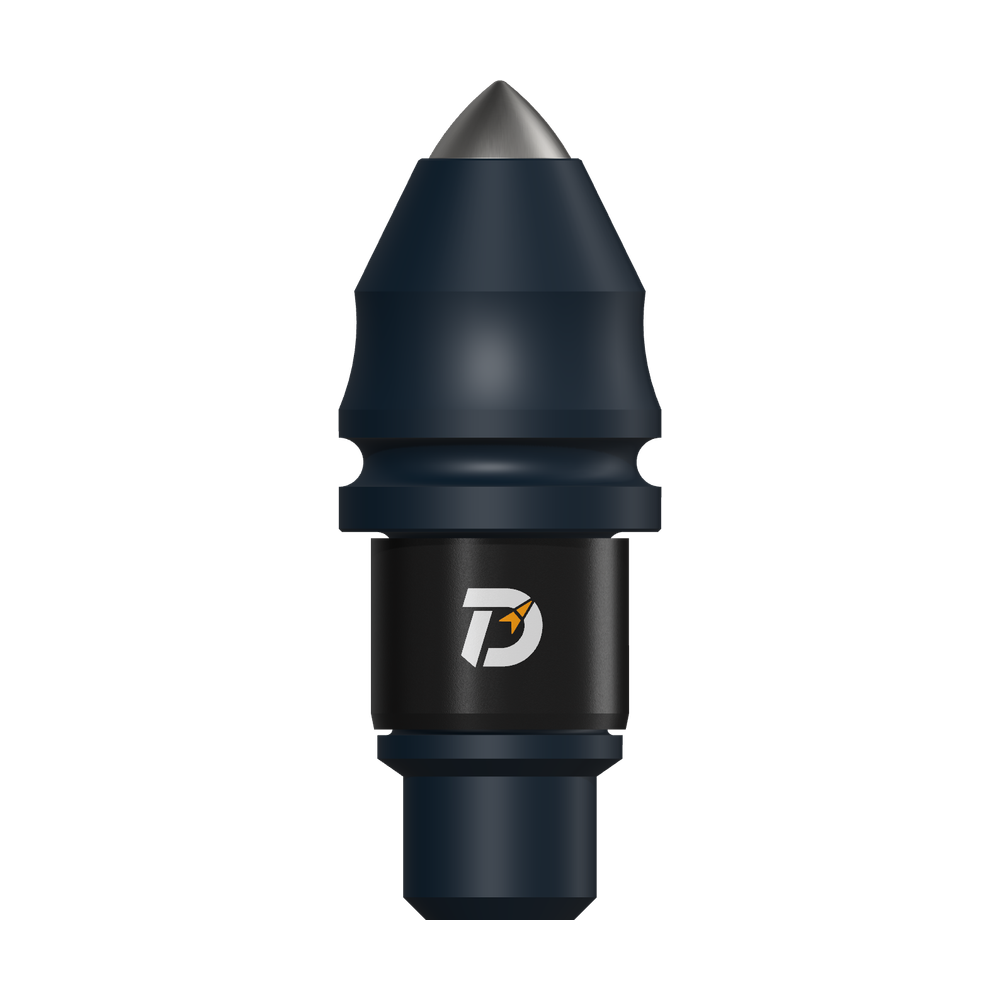 B47K22 bullet tooth
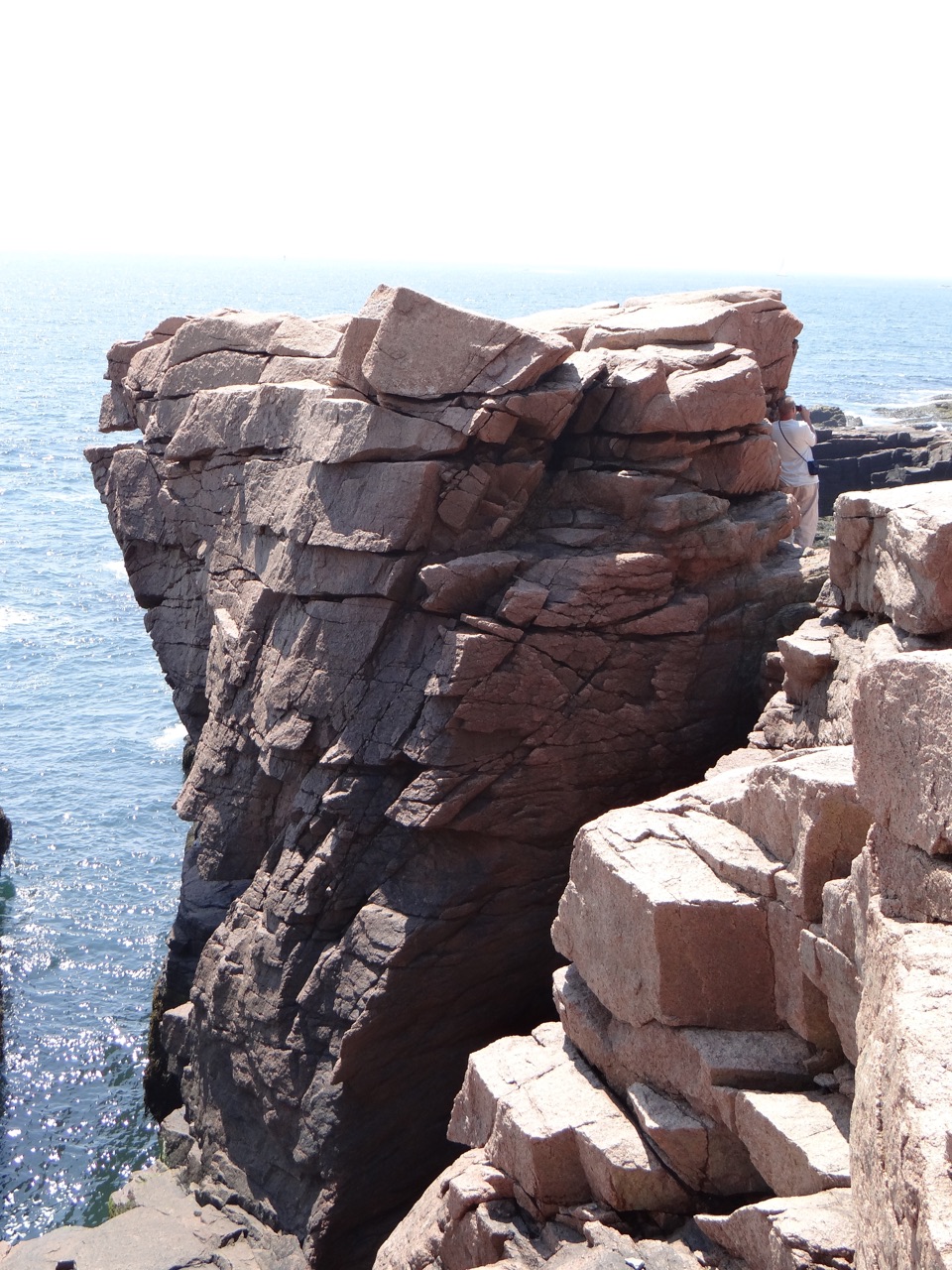
Two intervals logged as granite can need different drilling approaches. One may be weathered and closely jointed; another may be massive and abrasive. A useful tool decision separates mineral hardness, intact-rock strength, wear potential and rock-mass structure before comparing cutters.
Intact-rock UCS: published test examples
These named specimens show measured uniaxial compressive strength (UCS), not fixed ranges for each rock type.
| Rock | Specimen | UCS (MPa) |
|---|---|---|
| Granite | Nevada Granite Pikes Peak Granite | 141.1 226.0 |
| Basalt | Nevada Basalt John Day Basalt | 148.0 355.0 |
| Limestone | Bedford Limestone Solenhofen Limestone | 51.0 245.0 |
| Sandstone | Berea Sandstone Navajo Sandstone | 73.8 214.0 |
| Shale | Flaming Gorge Shale Micaceous Shale | 35.2 75.2 |
| Marble | Taconic Marble Cherokee Marble | 62.0 66.9 |
| Gneiss | Dworshak Dam Gneiss | 162.0 |
| Quartzite | Baraboo Quartzite | 320.0 |
Source: FHWA NHI-01-031, Table 10-4 (2001; after Goodman, 1989).
Cementation, porosity, weathering and loading direction affect strength. Use your project’s test results for selection.
Read the strength classes
- R0 · Extremely weak0.25–1 MPa
- R1 · Very weak1–5 MPa
- R2 · Weak5–25 MPa
- R3 · Medium strong25–50 MPa
- R4 · Strong50–100 MPa
- R5 · Very strong100–250 MPa
- R6 · Extremely strong>250 MPa
FHWA NHI-11-032, Table 4-7 (2011).
Mohs, UCS and abrasivity answer different questions
Mohs hardness ranks resistance to scratching. It describes minerals: USGS lists calcite at 3 and quartz at 7. It is not a compressive-strength scale, and a rock containing quartz does not acquire one universal drilling rating. A scratch observation can help identify a mineral; it cannot be converted into a reliable UCS value. USGS mineral-hardness reference
Uniaxial compressive strength (UCS) describes failure of a prepared intact specimen under axial compression without lateral confinement, commonly reported in MPa. The test result belongs to that specimen and its condition. Preserve depth, test method, moisture condition and sample orientation when forwarding results. A point-load index is a different test result; do not silently relabel it UCS. BGS explanation of strength tests
Abrasivity concerns the rock’s tendency to wear a cutting tool. The CERCHAR Abrasiveness Index measures wear of a specified steel stylus scratched across a freshly broken rock surface, or a saw-cut surface where the test method permits. Surface preparation and stylus hardness affect the result. This is why “high strength” and “high wear” should be separate fields in a selection discussion. CAI is an index for comparison, not a direct prediction of the metres a particular roller bit will drill. ASTM D7625 public scope
A strong piece is not the whole rock mass
Joints, bedding, weathering and infill influence how the excavation separates. Record discontinuity spacing and orientation alongside core recovery and RQD; none replaces an intact-rock test. Water inflow can also vary between nearby boreholes. Read these observations together rather than treating one laboratory result as a complete description. FHWA, Chapter 2
Choose the cutting element and the complete tool separately
A roller bit or bullet tooth is a cutting element. A core barrel, auger or drilling bucket is the assembly that supports cutters and manages excavation. Comparing all five as interchangeable alternatives obscures the decision. First choose the cutting and material-removal approach; then choose compatible cutters, mounting and wear protection.
| Observed challenge | Configuration to discuss | What still decides the choice |
|---|---|---|
| Ground can be chipped and carried on flights | Rock auger with an appropriate tooth arrangement | Fragment size, retention, available torque and crowd, and the bore support method |
| Excavated material must be retained through a liquid-filled hole | Drilling bucket with the appropriate cutting bottom | Cutting capability, filling and discharge; base cleaning needs a suitable clean-out tool |
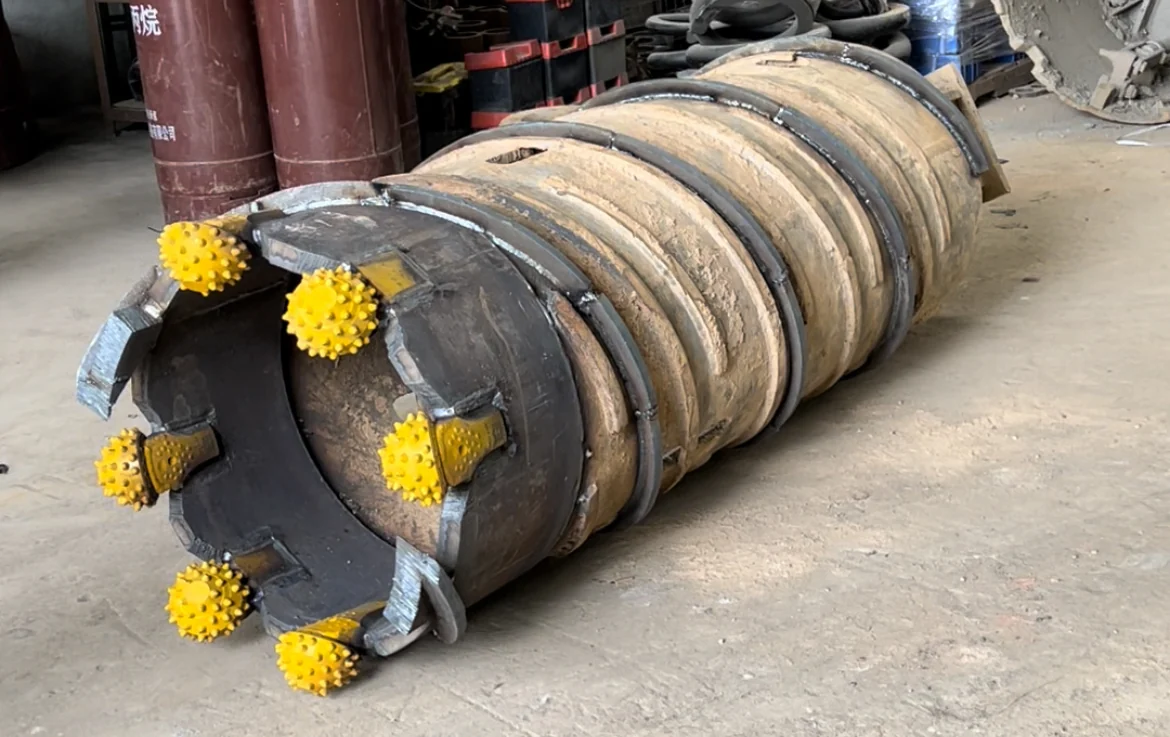
| Full-face excavation makes poor progress in competent rock | Core barrel, then compare bullet-tooth and roller-bit cutting rings | Breakout and recovery of the core, cuttings removal, cutting paths and rig capacity |
BAUER’s official range illustrates why augers, buckets and core barrels serve different roles; its tool-family descriptions are useful context, not ratings for a DRILLNOVA model. BAUER drilling-tool overview
For a core barrel, the narrower annular cut concentrates the applied load around the perimeter. Cutting the ring does not automatically release or lift the core: recovery must be planned alongside penetration. A drilling bucket and a purpose-designed clean-out bucket also have different jobs. FHWA, sections 4.3.1.2–4.3.1.3
When to compare roller bits with bullet teeth
Discuss a roller-bit core barrel when compact rock challenges the existing cutting arrangement. Compare a bullet-tooth configuration where the ground and available feed allow effective chipping. BAUER separately documents round-shank-chisel and roller-bit barrels, with different application ranges, and expressly describes its selection chart as non-binding. No rock name alone establishes the boundary. BAUER core-barrel catalogue
For either system, ask whether the observed problem is slow penetration, cutter wear, mounting damage, blocked cuttings or unsuccessful core recovery. A larger insert or a different cutter family does not address every one of those problems. Compare the complete configuration and its service condition before changing the consumable.
Measure the next trial across the complete cycle
Keep depth interval, assembly, cutter positions and operating observations together. Record penetration time separately from core breaking, lifting, emptying and cleaning, then compare wear after a defined interval. This practical comparison is more useful than a blanket promise for “granite.” Send the ground report and current assembly through a cutting-system review; use our core-barrel selection guide for the configuration details.