
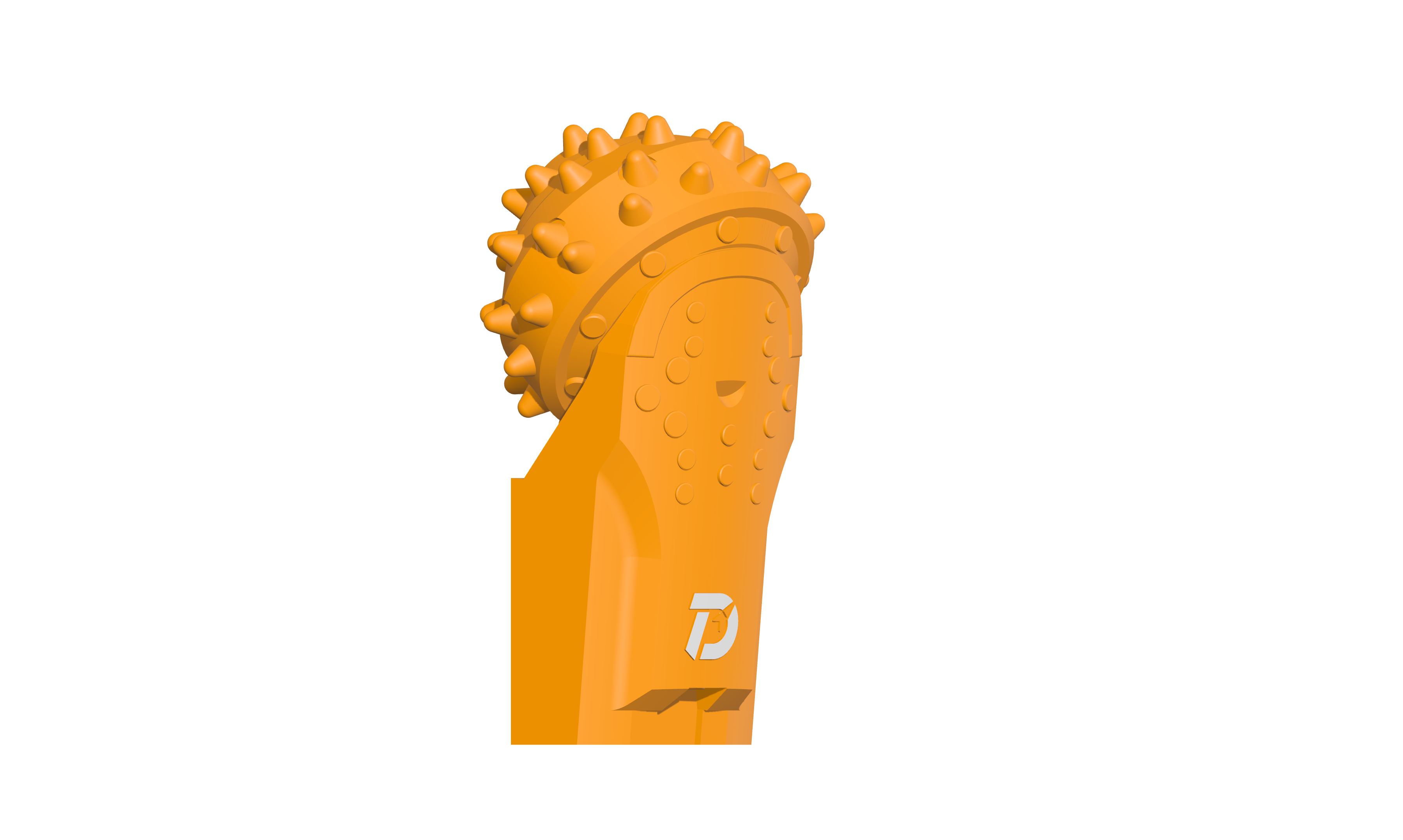
 WS39 casing tooth
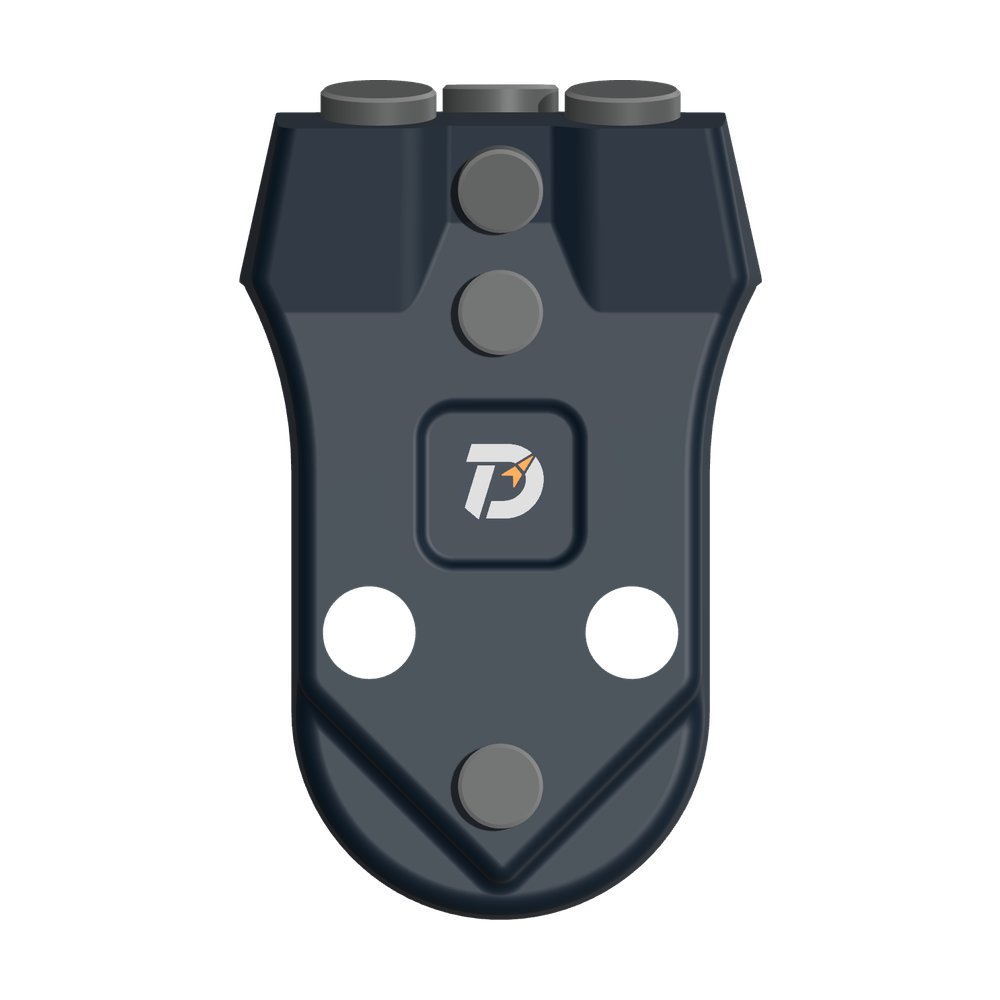
 JM cutter tooth
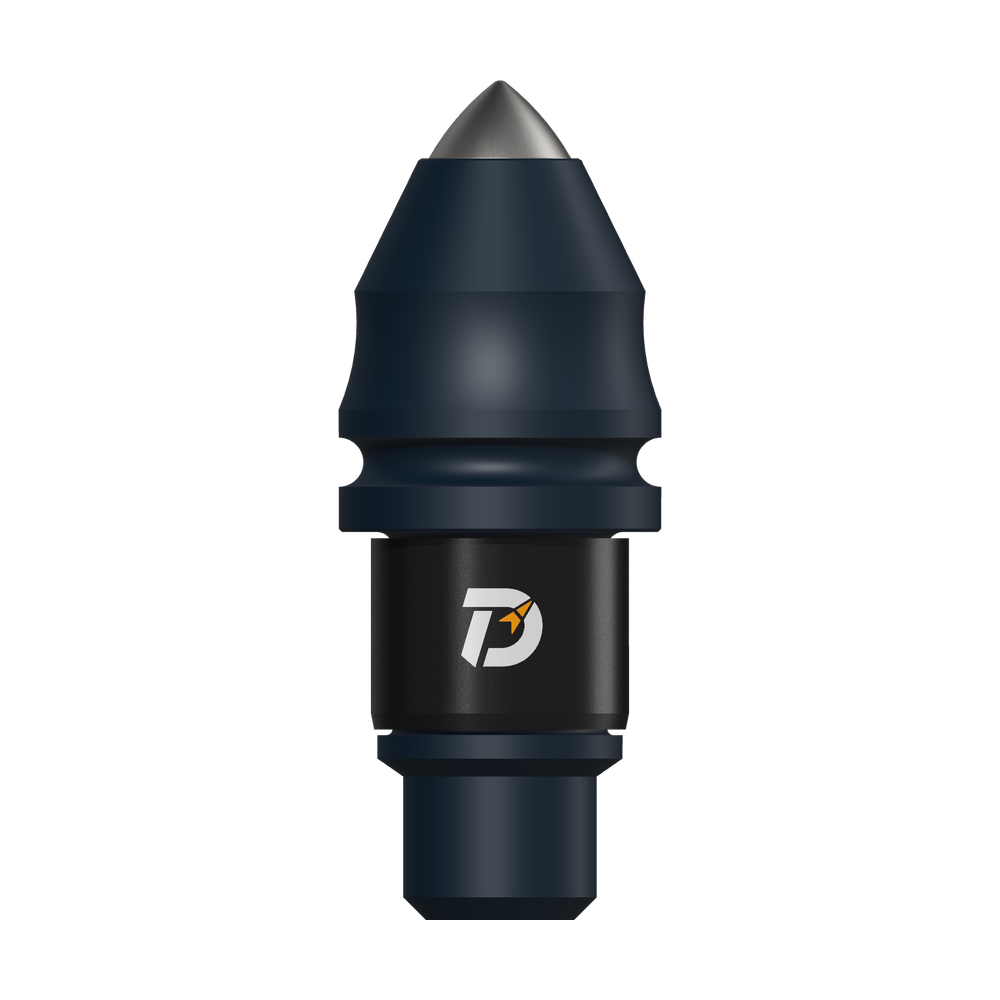 B47K22 bullet tooth
The scraper is a separate working part beside the roller bits. In the arrangements discussed in our operator and design notes, it addresses rock left between the cutter tracks and helps direct loose fragments outward. Understanding those two jobs starts with separating a remaining rock ridge, loose fragments and fine powder.
A rock ridge is different from loose cuttings
The roller bits work along inner and outer cutting tracks. Depending on the arrangement, a local ridge can remain between those tracks. It is still part of the rock profile: it has not yet become a loose piece that can move away.
The original design discussion gives the scraper a role at this remaining rock, as well as a role in directing fragments. This explains why treating the scraper only as a plate for moving spoil misses part of its intended job.
A ridge is a possibility to consider in the selected layout, not an inevitable feature of every barrel. The cutting-envelope guide explains the inner and outer working paths.
Follow three jobs through one assembly
Once a piece has broken away, its route matters. In the arrangements discussed, the scraper helps direct fragments towards the outside of the barrel, where the external guides continue the route along the shell.
| Part | Role to identify on the layout |
|---|---|
| Roller bits | Establish the cutting tracks that form the annular cut. |
| Scraper | Address the residual rock area identified in the layout and help direct loose fragments outward. |
| External guides | Continue the fragments’ route along the outside of the barrel. |
The scraper outlet and the guide entrance therefore need to be understood together. An outward-facing scraper alone does not describe the whole path. For the inspection of a restricted passage, use the existing cuttings-route guide.
“Outward” and “lower” answer different questions
Outward describes movement away from the barrel centre. Axial position describes where the scraper sits along the barrel’s axis relative to the roller-bit working position. Moving its edge farther towards the hole bottom does not, by itself, provide a route to the external guides.
Read direction and position separately on the assembly drawing. The source discussions include different height proposals for different arrangements; they do not establish one offset to copy. A workshop photograph without defined measurement references cannot settle that relationship either.
A wider fragment path does not prove fines are leaving
The operator notes distinguish scraping rock fragments from carrying fine powder away. They also discuss settling and the fluid around the working face. These are connected concerns, but a wider mechanical passage alone does not establish that fines are being removed.
When interpreting the tool, ask which material is being discussed: rock still attached, loose pieces, or fine particles. That distinction helps explain why increasing scraper size or guide space is not a complete answer to every cuttings problem.